

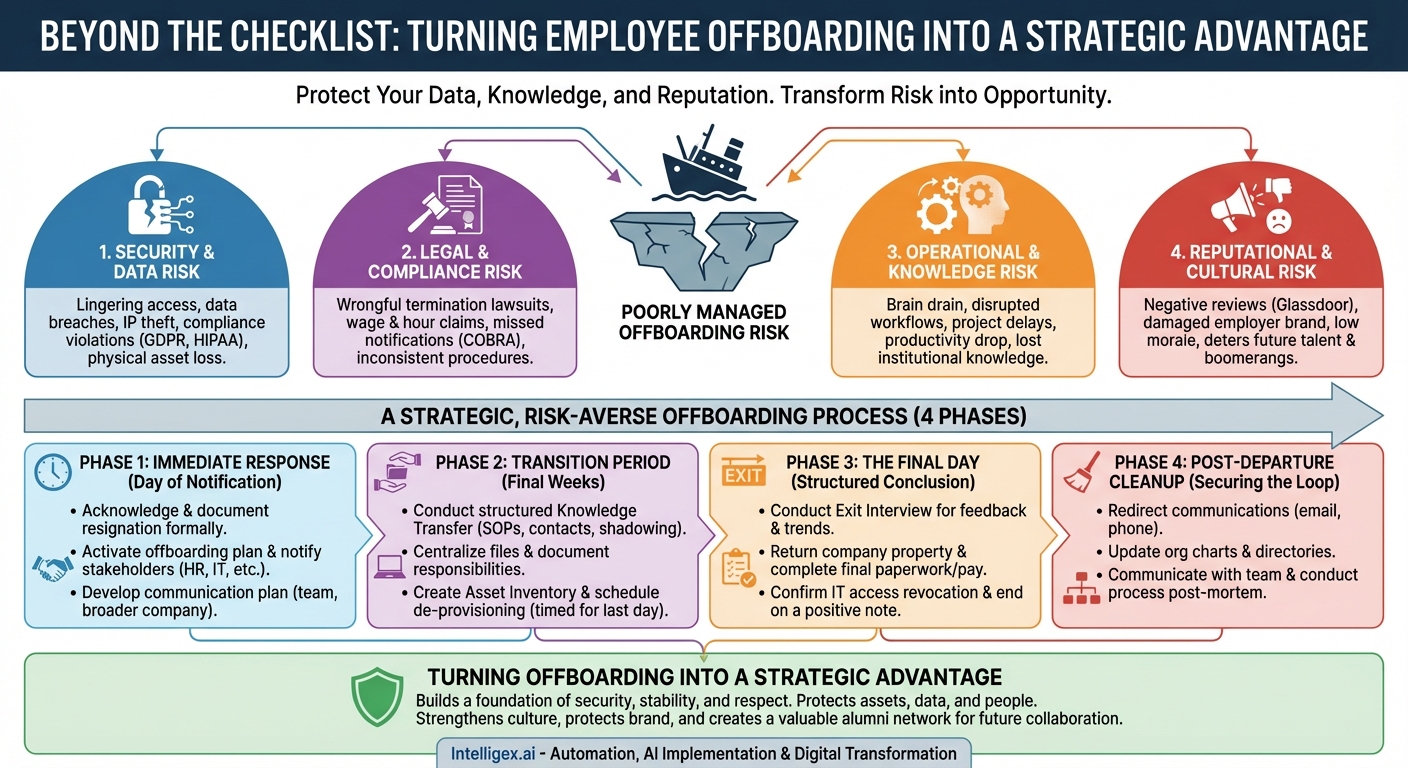
When an employee leaves, the focus is often on the immediate gap they leave behind: who will take over their projects? How quickly can we hire a replacement? While these are valid concerns, an even greater, often overlooked, threat lurks in the background: the risk associated with a poorly managed offboarding process. While companies invest heavily in creating a memorable and effective onboarding experience, the offboarding process is frequently treated as a rushed, administrative afterthought. This is a critical mistake. A structured, thoughtful offboarding is not just about being polite; it’s a fundamental risk management strategy that protects your company’s data, knowledge, and reputation.
Failing to properly offboard an employee can open the door to a host of preventable disasters. From lingering network access that leads to a data breach, to a loss of critical institutional knowledge that grinds a project to a halt, the stakes are incredibly high. A negative departure experience can also tarnish your employer brand, dissuading future talent and even “boomerang” employees who might otherwise have returned. By reframing offboarding from a simple HR checklist to a strategic process, you can transform a moment of transition into an opportunity to secure your organization for the future.
The Four Pillars of Offboarding Risk
Before diving into the step-by-step process, it’s crucial to understand the specific risks you are trying to mitigate. A comprehensive offboarding strategy is built to address four primary areas of vulnerability.
1. Security and Data Risk
This is arguably the most immediate and tangible threat. A former employee who retains access to company systems—email, cloud storage, proprietary software, CRM—is a walking security liability. Whether malicious or accidental, their ability to access, alter, or steal sensitive data can lead to devastating consequences, including intellectual property theft, compliance violations (like GDPR or HIPAA), and severe reputational damage. The risk isn’t just digital; it also includes physical assets like keys, ID badges, and company equipment.
2. Legal and Compliance Risk
The departure process is fraught with legal landmines. Mishandling final paychecks, failing to provide required notifications about benefits like COBRA, or inconsistent termination procedures can lead to wrongful termination lawsuits, wage and hour claims, and other costly legal battles. Proper documentation and adherence to a standardized, equitable process for all departing employees is your best defense against these compliance-related risks.
3. Operational and Knowledge Risk
Every employee holds a unique repository of institutional knowledge—the “how things really get done” information that isn’t written down in any manual. When they walk out the door, that knowledge often goes with them. This “brain drain” can disrupt workflows, delay projects, and strain client relationships. Without a structured knowledge transfer plan, the remaining team is left scrambling to piece together processes, passwords, and key contact information, leading to a significant drop in productivity and efficiency.
4. Reputational and Cultural Risk
How you treat an employee on their way out says more about your company culture than any mission statement. A poorly handled departure can leave a lasting negative impression, which can easily find its way to public forums like Glassdoor or LinkedIn. This can damage your ability to attract top talent. Furthermore, it sends a negative message to your current employees, potentially impacting morale and engagement. Conversely, a respectful and organized process can create a brand ambassador, even in a departing employee, and maintains the possibility of them returning in the future as a valuable “boomerang” hire.
A Step-by-Step Guide to a Risk-Averse Offboarding Process
A successful offboarding process isn’t a single event; it’s a multi-phase procedure that begins the moment an employee gives notice and continues even after their last day. Here’s a detailed breakdown of the essential steps.
Phase 1: The Immediate Response (The Day of Notification)
The clock starts ticking the second a resignation is tendered or a termination decision is made. Your immediate actions set the tone for the entire process.
- Acknowledge and Document: Formally accept the resignation in writing. This creates a clear paper trail with an official end date. For terminations, ensure all legal and HR documentation is meticulously prepared and reviewed beforehand.
- Activate the Offboarding Plan: This shouldn’t be an ad-hoc process. Immediately notify key stakeholders—HR, IT, payroll, and the employee’s direct manager—to initiate their respective offboarding protocols. Using a centralized checklist or project management tool can ensure no step is missed.
- Develop a Communication Plan: Decide who needs to be told, when, and how. The manager should prepare to inform the immediate team personally. A broader, carefully worded announcement can be planned for later. This prevents rumors and ensures a consistent message.
Phase 2: The Transition Period (The Final Weeks)
This period, typically the standard two weeks’ notice, is the most critical for knowledge transfer and operational continuity. It’s your window to de-risk the departure by capturing and redistributing the employee’s responsibilities.
Conduct a Knowledge Transfer Handoff
This is the most important step for mitigating operational risk. It needs to be a structured, deliberate process, not a few casual conversations.
- Document Everything: Have the departing employee create detailed documentation for their core responsibilities. This should include Standard Operating Procedures (SOPs), project statuses, and access details for key systems (which will be transferred, not shared).
- Identify Key Contacts: Create a list of all internal and external contacts, vendors, and clients the employee manages, along with a summary of the relationship status and any ongoing conversations.
- Schedule Shadowing Sessions: If a replacement or interim has been identified, have them shadow the departing employee. This real-time learning is invaluable for a smooth transition.
- Centralize Files: Ensure all work-related files are moved from personal or desktop folders to a shared, secure, and centrally accessible location like a company server or cloud drive.
Manage Assets and Prepare for Access Revocation
Simultaneously, the administrative and security preparations must be underway.
- Create an Asset Inventory: HR or the manager should compile a list of all company property issued to the employee: laptop, monitor, phone, keys, access cards, company credit cards, etc. This list will be used as a checklist on their final day.
- Schedule De-provisioning: IT should schedule the exact time for revoking all system access. Crucially, this should be timed to coincide with the employee’s official departure time on their last day. This includes email, Slack/Teams, VPN, software licenses, and any other cloud or internal platforms.
Phase 3: The Final Day
The last day should be a structured and respectful conclusion to the employee’s tenure. It’s a day for final handovers, not new work.
The Exit Interview
Conducted by a neutral HR representative, the exit interview is a goldmine of feedback for mitigating future attrition and improving company culture. It is not a time for confrontation.
- Ask Open-Ended Questions: Inquire about their reasons for leaving, their experience with management, the company culture, and what could be improved.
- Listen Actively: The goal is to gather honest, constructive feedback. Assure the employee that their responses are confidential and will be used to make positive changes.
- Identify Trends: Aggregate exit interview data over time to spot patterns related to specific departments, managers, or policies that may be driving turnover.
Final Administrative Tasks
- Return of Company Property: Using the asset inventory list created earlier, collect all company property. Check that devices have been wiped of personal data and are in good working order.
- Final Paperwork and Paycheck: Provide the employee with their final paycheck in accordance with state laws. Review and have them sign any necessary final paperwork, such as non-disclosure agreements or benefit forms. Provide clear, written information about COBRA, 401(k) rollovers, and other benefits.
- Confirm Access Revocation: As the employee leaves the building, HR should confirm with IT that all digital access has been officially terminated. This coordinated timing is a critical security control point.
- End on a Positive Note: The manager should thank the employee for their contributions. A graceful and respectful goodbye reinforces a positive culture and keeps the door open for future collaboration.
Phase 4: Post-Departure Cleanup
The work isn’t over when the employee is gone. These final steps secure the loop and protect the business.
- Redirect Communications: Set up an email auto-responder and forward the employee’s inbox to their manager or replacement to ensure no client requests or important messages fall through the cracks. Update their voicemail greeting with similar instructions.
- Communicate with the Team: The manager should meet with the remaining team to discuss the transition plan, clarify roles and responsibilities, and address any concerns. This reassures the team and maintains morale.
- Conduct a Process Post-Mortem: After the dust settles, review the offboarding process itself. Were there any gaps? Was the knowledge transfer sufficient? Use this feedback to continually refine your offboarding checklist.
– Update Organizational Charts and Directories: Remove the employee from the company website, internal directories, and any relevant distribution lists.
Turning Offboarding into a Strategic Advantage
A well-executed offboarding process does more than just check boxes; it builds a foundation of security, stability, and respect. It protects your most valuable assets: your data, your institutional knowledge, and your people. By treating a departure with the same strategic importance as a new hire, you transform a potentially risky event into a predictable, controlled process. You not only safeguard your organization from immediate threats but also strengthen your culture, protect your brand, and create a network of alumni who speak highly of your company long after they’ve left. In today’s competitive landscape, that is an advantage no business can afford to ignore.
Your Next Read:
Category:
Get a FREE
Proof of Concept
& Consultation
No Cost, No Commitment!