
سباق تنفيذ الذكاء الاصطناعي قد بدأ. عبر الصناعات، تتسابق المنظمات للاستفادة من الذكاء الاصطناعي في كل شيء من تحسين سلاسل التوريد إلى تخصيص تجارب العملاء. هذا الحماس له ما يبرره؛ فإمكانات الابتكار والميزة التنافسية هائلة. ومع ذلك، تحت سطح هذه التكنولوجيا التحويلية، يكمن مشهد مليء بالمخاطر الفريدة والمعقدة. مشاريع الذكاء الاصطناعي ليست مجرد مشاريع برمجيات أكبر؛ إنها نوع مختلف، والتعامل معها على هذا النحو هو الخطوة الأولى نحو النجاح. غالبًا ما تفشل أطر إدارة المخاطر التقليدية، رغم قيمتها، في التقاط التحديات الدقيقة للذكاء الاصطناعي. هنا تصبح الأداة المتخصصة ليست فقط مفيدة، بل أساسية: خريطة حرارة مخاطر مشروع الذكاء الاصطناعي.
تساعد هذه الأداة المرئية البسيطة ولكن القوية الفرق على تحديد وتقييم وترتيب المخاطر المحددة الكامنة في تطوير الذكاء الاصطناعي. إنها تحول المخاوف المجردة إلى خطة ملموسة وقابلة للتنفيذ، مما يمكّن الفرق من التنقل في مياه تنفيذ الذكاء الاصطناعي المضطربة بثقة. من خلال رسم خريطة للعقبات المحتملة، يمكنك بناء حواجز حماية بشكل استباقي، وتخصيص الموارد بفعالية، وضمان أن مشروعك يحقق وعده دون أن يقع فريسة للفشل الشائع وغالبًا ما يكون مكلفًا.
لماذا إدارة المخاطر التقليدية ليست كافية للذكاء الاصطناعي
إذا كنت قد أدرت مشروع برمجيات معقد، فأنت على دراية بسجلات المخاطر وخطط التخفيف. تتعقب تجاوزات الميزانية، وزيادة نطاق العمل، والديون التقنية. بينما لا تزال هذه الأمور ذات صلة، يقدم الذكاء الاصطناعي فئات جديدة تمامًا من المخاطر التي يمكن أن يكون لها عواقب بعيدة المدى. الالتزام فقط بنهج تقليدي يشبه محاولة التنقل في مدينة جديدة باستخدام خريطة قديمة – ستفوت الطرق الجديدة، والعوائق غير المتوقعة، والشوارع ذات الاتجاه الواحد.
تنبع التحديات الفريدة للذكاء الاصطناعي من مكوناته الأساسية: البيانات، والنماذج، والطبيعة الاحتمالية لمخرجاته.
- المخاطر المعتمدة على البيانات: على عكس البرمجيات التقليدية حيث يتم ترميز المنطق بشكل صريح، تتعلم نماذج الذكاء الاصطناعي من البيانات. وهذا يجعلها عرضة بشكل عميق لجودة تلك البيانات. تؤدي البيانات المتحيزة إلى نماذج متحيزة وغير عادلة. تؤدي البيانات ذات الجودة الرديئة إلى أداء ضعيف. تعني البيانات غير الكافية أن النموذج لا يمكنه التعميم. علاوة على ذلك، فإن استخدام مجموعات بيانات ضخمة، غالبًا ما تحتوي على معلومات شخصية، يزيد من مخاطر الخصوصية والأمان بشكل كبير.
- المخاطر المتعلقة بالنماذج والخوارزميات: الطبيعة نفسها لبعض النماذج المتقدمة، وخاصة الشبكات العصبية العميقة، يمكن أن تكون خطرًا. مشكلة “الصندوق الأسود”، حيث لا يمكن حتى للمبدعين شرح عملية اتخاذ القرار المحددة للنموذج بالكامل، تطرح تحديات كبيرة للمسؤولية وتصحيح الأخطاء. خطر آخر حاسم هو “انحراف النموذج”، حيث يتدهور أداء النموذج بمرور الوقت مع انحراف البيانات الواقعية التي يواجهها عن البيانات التي تم تدريبه عليها.
- المخاطر الأخلاقية والسمعية: يمكن أن يتسبب نظام ذكاء اصطناعي يتخذ قرارات قروض غير عادلة، أو يظهر تحيزًا عرقيًا أو جنسيًا، أو يؤدي إلى فشل حرج في السلامة في إلحاق ضرر لا يمكن إصلاحه بسمعة الشركة وأرباحها. هذه الاعتبارات الأخلاقية ليست حالات هامشية؛ بل هي مخاطر مركزية يجب إدارتها من اليوم الأول.
- المخاطر البشرية والتنظيمية: تتطلب مشاريع الذكاء الاصطناعي مزيجًا فريدًا من المهارات المطلوبة بشدة. يمكن أن يؤدي فجوة المهارات الحرجة إلى تعثر المشروع. بنفس القدر من الخطورة هي التوقعات غير المتوافقة من أصحاب المصلحة الذين قد يرون الذكاء الاصطناعي كحل سحري، مما يؤدي إلى أهداف غير محددة بشكل جيد وخيبة أمل حتمية. يمكن أن تكون اعتماد المستخدم أيضًا عقبة كبيرة إذا لم يثق المستخدمون النهائيون أو يفهموا الأدوات المعززة بالذكاء الاصطناعي التي يتم تقديمها لهم.
تشريح خريطة حرارة مخاطر مشروع الذكاء الاصطناعي
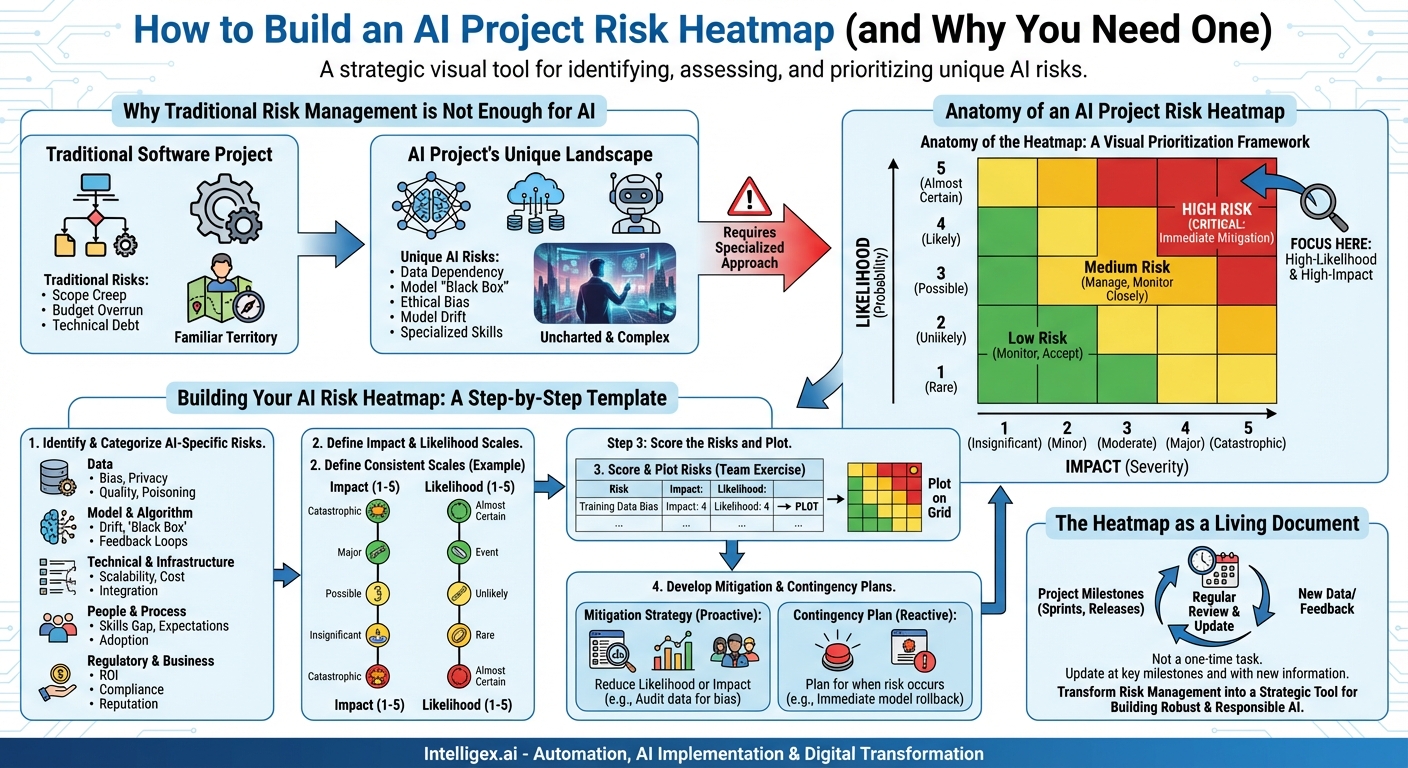
خريطة حرارة المخاطر هي أداة بصرية تُستخدم لتمثيل المخاطر بطريقة مفهومة على الفور. إنها شبكة ترسم المخاطر على محورين: الاحتمالية (احتمالية حدوث الخطر) و الأثر (شدة العواقب إذا حدث). تحدد مجموعة هذين العاملين مستوى الخطر العام، والذي يتم تمثيله عادةً بلون.
الهدف بسيط: جذب انتباه الجميع إلى الزاوية العلوية اليمنى من الخريطة. هذه هي المخاطر ذات الاحتمالية العالية والأثر الكبير التي تتطلب استراتيجيات تخفيف فورية وقوية.
يوفر نظام ترميز الألوان إطار عمل لتحديد الأولويات بسرعة:
- الأحمر (خطر مرتفع): هذه هي التهديدات الأكثر خطورة لديك (على سبيل المثال، احتمال مرتفع، أثر كبير). تتطلب اهتمامًا فوريًا، وموارد مخصصة، وخطة تخفيف شاملة. هذه هي المخاطر التي يمكن أن تعرقل مشروعك بمفردها أو تسبب ضررًا كبيرًا للأعمال.
- الأصفر/الكهرماني (خطر متوسط): هذه المخاطر مهمة ويجب إدارتها، لكنها قد لا تتطلب نفس مستوى الإلحاح مثل مخاطر المنطقة الحمراء. يجب تطوير خطط تخفيف ومراقبة المخاطر عن كثب.
- الأخضر (خطر منخفض): هذه هي المخاطر ذات الاحتمالية المنخفضة و/أو الأثر المنخفض. بينما لا ينبغي تجاهلها تمامًا، يمكن غالبًا قبولها أو إدارتها بجهد ضئيل، مما يسمح للفريق بالتركيز على القضايا الأكثر إلحاحًا.
تكمن قوة خريطة الحرارة في قدرتها على تسهيل التواصل. يمكن أن تنقل خريطة حرارة مصممة بشكل جيد المشهد الكامل للمخاطر لمشروع ذكاء اصطناعي معقد إلى مدير غير تقني في غضون ثوانٍ. إنها تخلق فهمًا مشتركًا ولغة مشتركة لمناقشة وتحديد أولويات المخاطر عبر فرق مختلفة، من علم البيانات والهندسة إلى القيادة القانونية والتجارية.
بناء خريطة حرارة مخاطر الذكاء الاصطناعي الخاصة بك: قالب خطوة بخطوة
إنشاء خريطة حرارة هو تمرين تعاوني، وليس مهمة فردية. يتطلب مدخلات من مجموعة متنوعة من أصحاب المصلحة ليكون فعالًا حقًا. إليك دليل عملي خطوة بخطوة لبناء واستخدام خريطتك الخاصة.
الخطوة 1: تحديد وتصنيف المخاطر الخاصة بالذكاء الاصطناعي
الخطوة الأولى هي العصف الذهني. اجمع فريقك – علماء البيانات، مهندسي التعلم الآلي، مديري المنتجات، الخبراء في المجال، وحتى ممثلين من القسم القانوني أو الامتثال – وحدد أكبر عدد ممكن من المخاطر المحتملة. لتنظيم هذه العملية، قم بتجميعها في فئات منطقية. إليك بعض الفئات الأساسية لأي مشروع ذكاء اصطناعي:
- مخاطر البيانات:
- تحيز منهجي في بيانات التدريب يؤدي إلى نتائج تمييزية.
- انتهاك لوائح خصوصية البيانات (مثل GDPR، CCPA).
- جودة ضعيفة في تصنيف البيانات تؤدي إلى نموذج غير دقيق.
- حجم بيانات غير كافٍ لتدريب نموذج قوي.
- تسمم البيانات أو هجمات معادية على مجموعة التدريب.
- مخاطر النماذج والخوارزميات:
- تدهور أداء النموذج بمرور الوقت (انحراف النموذج).
- عدم قابلية تفسير النموذج (“الصندوق الأسود”) تمنع التدقيق والثقة.
- دوائر تغذية سلبية غير مقصودة (مثل محرك توصية يضيق خيارات المستخدم بمرور الوقت).
- فشل النموذج بشكل كارثي في الحالات النادرة التي لم يتم رؤيتها في التدريب.
- ثغرات أمنية تسمح باستخراج النموذج أو هجمات معادية على النموذج المنشور.
- المخاطر التقنية والبنية التحتية:
- عدم القدرة على توسيع النموذج للتعامل مع حركة المرور على مستوى الإنتاج.
- تكاليف الحوسبة السحابية العالية وغير المتوقعة للتدريب أو الاستدلال.
- تكامل معقد مع الأنظمة القديمة الموجودة.
- اعتماد على بائع واحد لجزء حاسم من مجموعة MLOps.
- مخاطر الأشخاص والعمليات:
- نقص المهارات المطلوبة (مثل MLOps، هندسة البيانات) داخل الفريق.
- توقعات غير واقعية من أصحاب المصلحة في الأعمال.
- ضعف اعتماد المستخدم بسبب نقص الثقة أو سهولة الاستخدام.
- يتم التعامل مع الإشراف الأخلاقي كفكرة لاحقة بدلاً من كمتطلب أساسي.
- المخاطر التنظيمية والتجارية:
- الحل النهائي لا يقدم العائد المتوقع على الاستثمار.
- المشروع ينتهك اللوائح الناشئة الخاصة بالذكاء الاصطناعي.
- ضرر سمعة نتيجة لفشل نموذج بارز.
- المشكلة التي يحلها الذكاء الاصطناعي ليست مشكلة تجارية ذات قيمة عالية.
الخطوة 2: تحديد مقاييس الأثر والاحتمالية الخاصة بك
لتقييم مخاطرك، تحتاج إلى مقياس متسق. يعمل مقياس بسيط من 1 إلى 5 لكل من الأثر والاحتمالية بشكل جيد. المفتاح هو تحديد ما يعنيه كل رقم في سياق مشروعك.
مقياس الأثر (مثال):
- 1 (غير مهم): إزعاج داخلي طفيف، لا تأثير على المستخدمين أو الميزانية.
- 2 (طفيف): تدهور طفيف في الأداء، إحباط طفيف للمستخدم، تأثير تكلفة ضئيل.
- 3 (متوسط): فشل ملحوظ في ميزة، تجربة مستخدم سلبية، تأثير مالي معتدل أو تأخير في المشروع.
- 4 (كبير): انقطاع كبير في النظام، تدقيق تنظيمي كبير، ضرر للعلامة التجارية، خسارة مالية كبيرة.
- 5 (كارثي): فشل واسع النطاق في النظام، عواقب سلامة شديدة، خرق بيانات كبير، إجراءات قانونية، وضرر سمعة لا يمكن إصلاحه.
مقياس الاحتمالية (مثال):
- 1 (نادر): من غير المحتمل جدًا أن يحدث في دورة حياة المشروع.
- 2 (غير محتمل): لا يُتوقع أن يحدث، ولكن من الممكن.
- 3 (ممكن): يمكن أن يحدث؛ لديه فرصة معقولة للحدوث (مثل ~50/50).
- 4 (مرجح): من المرجح أن يحدث أكثر من عدم حدوثه.
- 5 (تقريبًا مؤكد): من المتوقع أن يحدث إذا لم يتم اتخاذ أي إجراء.
الخطوة 3: تقييم المخاطر ورسم خريطة الحرارة
استعرض قائمة المخاطر المحددة واحدة تلو الأخرى. كفريق، ناقش وخصص درجة لكل من الأثر والاحتمالية. هذه المناقشة غالبًا ما تكون ذات قيمة مثل الناتج النهائي نفسه، حيث تجبر على التوافق وتكشف عن وجهات نظر مختلفة. على سبيل المثال، قد يقوم مهندس بتقييم احتمال خطر تقني بشكل أعلى، بينما قد يكون لدى مدير المنتج فهم أفضل لتأثيره المحتمل على المستخدمين.
بمجرد أن يكون لكل خطر زوج (أثر، احتمال)، يمكنك رسمه على شبكة خريطة الحرارة الخاصة بك. خطر تم تقييمه كـ (أثر=4، احتمال=4) سيقع بشكل واضح في المنطقة الحمراء، بينما خطر (أثر=2، احتمال=2) سيكون في المنطقة الخضراء.
الخطوة 4: تطوير خطط التخفيف والطوارئ
خريطة الحرارة ليست جائزة للإعجاب؛ إنها دعوة للعمل. بالنسبة لكل خطر، خاصة تلك الموجودة في المناطق الحمراء والصفراء، يجب عليك تحديد خطة تخفيف. يتضمن ذلك الإجابة على السؤال: “ماذا سنفعل لتقليل احتمال أو أثر هذا الخطر؟”
اعتبر خطر “التحيز المنهجي في بيانات التدريب” (مثل، أثر=5، احتمال=3).
- استراتيجية التخفيف: تنفيذ نهج متعدد الجوانب بشكل استباقي. قد يشمل ذلك إجراء تحليل بيانات استكشافي شامل (EDA) مع مقاييس العدالة، واستخدام تقنيات زيادة البيانات لتحقيق توازن بين الفئات، وتوظيف مُعّلقين بشريين متنوعين لتصنيف البيانات، واستخدام أدوات العدالة (مثل أداة What-If من Google أو AIF360 من IBM) لتدقيق النموذج قبل النشر. تعيين مالك مسؤول عن الإشراف على هذه الإجراءات.
بالنسبة لبعض المخاطر، قد تقوم أيضًا بإنشاء خطة طوارئ: “إذا حدث هذا الخطر، ما هي خطة استجابتنا الفورية؟” هذا أمر حاسم للمخاطر عالية الأثر حيث قد لا تكون التخفيفات مضمونة.
خريطة الحرارة كوثيقة حية
ربما تكون القاعدة الأكثر أهمية لاستخدام خريطة حرارة مخاطر الذكاء الاصطناعي هي أنها ليست “منتهية”. مشروع الذكاء الاصطناعي هو رحلة اكتشاف. سيتغير مشهد المخاطر باستمرار مع حصولك على بيانات جديدة، وتجربتك مع نماذج مختلفة، والحصول على ملاحظات المستخدمين.
يجب أن تكون خريطتك وثيقة حية، مدمجة في إيقاع مشروعك. راجعها وقم بتحديثها في المعالم الرئيسية: في نهاية كل دورة، قبل إصدار رئيسي، أو عندما يتغير افتراض كبير. هذه المراجعة المنتظمة تبقي إدارة المخاطر في مقدمة وعي الفريق وتضمن أنك دائمًا مركز على التهديدات الأكثر أهمية لنجاح مشروعك.
من خلال اعتماد هذا النهج الديناميكي، تحول إدارة المخاطر من تمرين ثابت، إلى أداة استراتيجية قوية. إنها تعزز ثقافة الوعي الاستباقي، مما يشجع الفرق على طرح سؤال “ماذا يمكن أن يسير بشكل خاطئ؟” ليس بدافع الخوف، ولكن كخطوة بناءة نحو بناء ذكاء اصطناعي أكثر قوة وموثوقية ومسؤولية. بينما الطريق نحو تطوير الذكاء الاصطناعي غير مؤكد بطبيعته، توفر خريطة حرارة مخاطر مشروع الذكاء الاصطناعي البوصلة التي تحتاجها للتنقل بنجاح، وتحويل العقبات المحتملة إلى تحديات مُدارة بشكل جيد وتحقيق الإمكانات التحويلية الحقيقية لعملك.
Your Next Read:
Category:
Get a FREE
Proof of Concept
& Consultation
No Cost, No Commitment!