

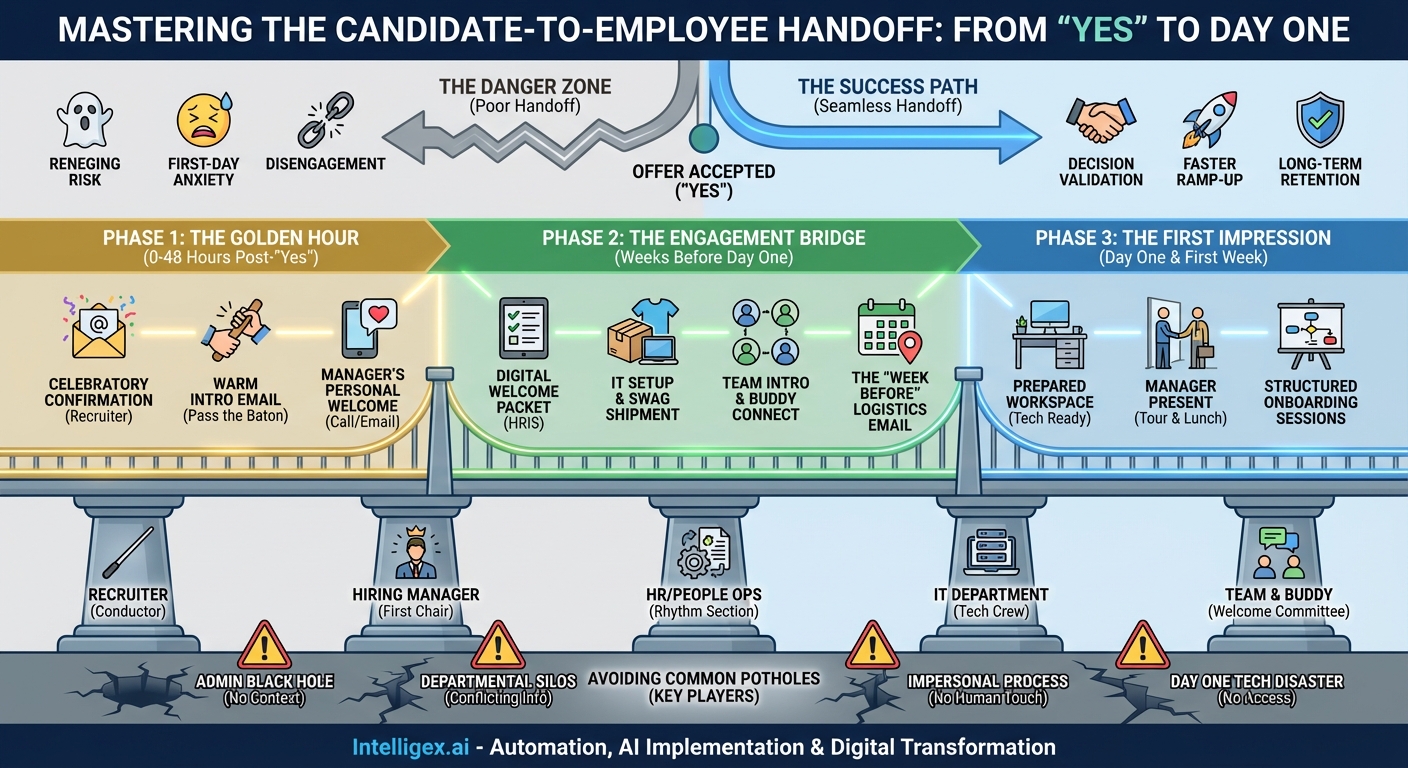
The moment a top candidate says “yes” to your job offer is a moment of triumph. Your sourcing, interviewing, and negotiation efforts have paid off. The role is filled, the team is happy, and you can close the requisition. But this celebratory moment is also one of the most fragile points in the entire talent lifecycle. The journey isn’t over; in many ways, it’s just beginning. The critical, and often fumbled, transition from “candidate” to “employee” has commenced, and the quality of this handoff process can determine a new hire’s success, engagement, and even their tenure with your company.
This period, spanning from offer acceptance to the end of the first week, is more than just an administrative bridge. It’s a powerful opportunity to validate the new hire’s decision, immerse them in your culture, and transform their initial excitement into long-term commitment. A disjointed, confusing, or silent handoff, on the other hand, can sow seeds of doubt and create a sense of disconnect before they even log in for the first time. Let’s explore the anatomy of a world-class candidate-to-employee handoff process and how to ensure your new hires feel welcomed, prepared, and valued from the very start.
More Than Just Paperwork: Why the Handoff is Crucial
In a competitive talent market, the candidate experience doesn’t end when the offer letter is signed. That period of a few weeks between acceptance and their start date is a potential “danger zone.” During this time, candidates are still susceptible to counteroffers from their current employer or competing offers from other companies. Any friction or lack of communication from your end can amplify what’s known as “candidate’s remorse.”
A poorly executed handoff can have significant negative consequences:
- Increased Risk of Reneging: Radio silence can be interpreted as disorganization or a lack of enthusiasm. This gives a new hire time to second-guess their decision and makes them more likely to back out.
- First-Day Anxiety: When new hires don’t know what to expect, who to meet, or what their first day will look like, they arrive with a sense of apprehension instead of excitement. This anxiety can hinder their ability to absorb information and connect with their new team.
- Diminished Early Engagement: The first impression sets the tone. A chaotic handoff suggests a chaotic workplace, which can lead to a new hire feeling disengaged and mentally checking out before they’ve even had a chance to contribute.
- Damage to Employer Brand: A negative onboarding experience is a story people tell. Word travels fast, and a reputation for being disorganized can deter future top candidates.
Conversely, a seamless, thoughtful, and personal handoff process reaps incredible rewards. It validates their choice, affirming that they made the right decision to join your team. It sets a positive cultural tone, demonstrating that your organization is proactive, organized, and truly cares about its people. This proactive engagement drastically reduces first-day jitters and accelerates their ramp-up time, ultimately leading to higher productivity, stronger loyalty, and increased long-term retention.
The Handoff Orchestra: A Symphony of Key Players
A successful handoff is not a solo performance; it’s a coordinated effort involving multiple departments and individuals. Each player has a distinct role, and their collaboration is key to creating a harmonious experience.
The Recruiter (The Conductor)
As the primary point of contact throughout the hiring process, the recruiter has built a relationship and trust with the candidate. Their role is to initiate the handoff with a warm, celebratory tone. They are responsible for ensuring the transition is smooth, making the formal introductions to HR and the hiring manager, and confirming that the baton has been securely passed.
The Hiring Manager (The First Chair)
This is arguably the most important relationship for the new hire. The hiring manager’s involvement is critical in transforming the candidate’s abstract idea of the role into a concrete reality. Their role shifts from evaluator to leader. A personal welcome, a discussion about the team, and a preview of their first projects can make an enormous impact on a new hire’s confidence and sense of belonging.
HR/People Operations (The Rhythm Section)
The HR team is the logistical backbone of the handoff. They manage the administrative engine: contracts, payroll, benefits enrollment, compliance paperwork, and background checks. Their goal is to make these necessary steps as simple, clear, and painless as possible, using technology and clear communication to guide the new hire through the process without overwhelming them.
The IT Department (The Tech Crew)
Nothing sours a first day faster than not having a working laptop or the right software access. The IT department is crucial for ensuring a productive start. The handoff to IT must be timely and detailed, providing them with the new hire’s name, role, start date, and specific hardware and software requirements well in advance.
The Team & Onboarding Buddy (The Welcome Committee)
The new hire’s immediate team and a designated onboarding buddy are the social fabric. They provide the informal, day-to-day context that official orientations often miss. A pre-start date introduction or a welcome message from the team can make the new hire feel like part of the group before they even walk through the door.
A Step-by-Step Guide to a Flawless Handoff
Breaking the process down into distinct phases with clear ownership ensures no detail is overlooked and the new hire feels supported at every stage.
Phase 1: The Golden Hour (Immediately After Offer Acceptance)
The 48 hours following a “yes” are critical for reinforcing a positive decision.
- The Recruiter’s Confirmation: The recruiter should immediately send a celebratory confirmation email. This shouldn’t be a generic template. It should reiterate excitement and clearly outline the next steps. It should include the signed offer letter and state who the new hire will hear from next (and when).
- The Warm Introduction Email: Within 24 hours, the recruiter sends a warm introduction email, copying the new hire, their hiring manager, and the primary HR contact. This email officially passes the baton. Example: “Hi [New Hire], I’m so thrilled you’ll be joining us! I’m looping in [Hiring Manager], your new manager, and [HR Contact], who will guide you through the next steps of your onboarding.”
- The Manager’s Personal Touch: The hiring manager must follow up within that same 24-48 hour window. This shouldn’t be about logistics; it should be a personal welcome. A quick phone call is fantastic, but a sincere email also works wonders. It should express genuine excitement, welcome them to the team, and perhaps mention looking forward to them contributing to a specific upcoming project.
Phase 2: The Engagement Bridge (The Weeks Before Day One)
This is the time to combat silence and build anticipation. The goal is to maintain a steady, but not overwhelming, stream of communication and complete administrative tasks efficiently.
- HR’s Welcome Packet: HR sends a digital welcome packet that includes a high-level overview of the onboarding schedule, a checklist of required documents and deadlines, and information on company culture and values. Using an HRIS platform to allow for easy digital signing of documents is a must.
- IT Handoff & Swag Shipment: The hiring manager or HR should immediately submit a ticket to IT with all the necessary equipment and access requests. This is also the perfect time to ship a company swag box. A t-shirt, water bottle, or notebook arriving a week before their start date is a powerful and welcoming surprise.
- Connecting with the Team: With the new hire’s permission, the hiring manager can send a brief bio to the immediate team to announce their arrival. Assign an onboarding buddy and encourage them to reach out via LinkedIn or email with a casual “hello” and an offer to answer any questions.
- The “Week Before” Email: Seven days before their start date, send a comprehensive email covering all first-day logistics:
- Arrival time and address (or login details for remote starts).
- Parking/transportation information.
- The first-day schedule (e.g., “9 AM: Meet with HR,” “11 AM: Team Introduction,” “12 PM: Lunch with the team”).
- Whom to ask for upon arrival.
- A reminder of the dress code (even if it’s casual, this relieves a common source of stress).
Phase 3: The First Impression (Day One & The First Week)
The handoff culminates on the first day, where preparation meets execution.
- A Prepared Workspace: The new employee’s desk or digital workspace must be ready to go. Their laptop should be on, login credentials available, and all necessary software installed. A welcome note from the manager, some swag, and a printed schedule for the week are fantastic touches.
- Manager Availability is Non-Negotiable: The hiring manager must be present to greet their new hire. They should give a tour, make in-person introductions, personally walk them through their first-week plan, and take them to lunch. This investment of time is invaluable.
- Structured Onboarding Sessions: HR should have a structured orientation session planned to cover the essentials like benefits, policies, and company mission. The onboarding buddy should be available to help them navigate the smaller things, like how the coffee machine works or the best place to grab a sandwich.
Avoiding the Common Potholes
Even with the best intentions, handoffs can go wrong. Be mindful of these common pitfalls:
- The Administrative Black Hole: Sending a mountain of forms with no context or follow-up. Solution: Use a digital onboarding platform and spread out tasks over the pre-boarding period.
- Departmental Silos: The new hire gets conflicting information from HR and their manager because they aren’t communicating. Solution: Use a centralized checklist (in Asana, Trello, or your HRIS) to track all handoff tasks and ensure everyone is on the same page.
- The Impersonal Assembly Line: The process is efficient but lacks any human touch. Solution: Mandate personal outreach from the hiring manager and onboarding buddy. These personal connections are what build loyalty.
- The Day One Tech Disaster: The laptop isn’t ready or access is denied. Solution: Implement a strict timeline where IT requests are submitted at least two weeks before the start date, with a confirmation of readiness required a few days prior.
Ultimately, the candidate-to-employee handoff is far more than an administrative checklist. It is the first, and most meaningful, demonstration of your company’s culture and values. It’s your chance to show a new hire, not just tell them, that they are a valued member of the team. By investing the time to create a thoughtful, coordinated, and personal process, you turn the fragile moment of acceptance into the solid foundation of a long and successful career at your organization.
Your Next Read:
Get a FREE
Proof of Concept
& Consultation
No Cost, No Commitment!
