Intelligex Logo
Intelligex Logo
Get A Consultation

Automation, Integration & Workflow Design

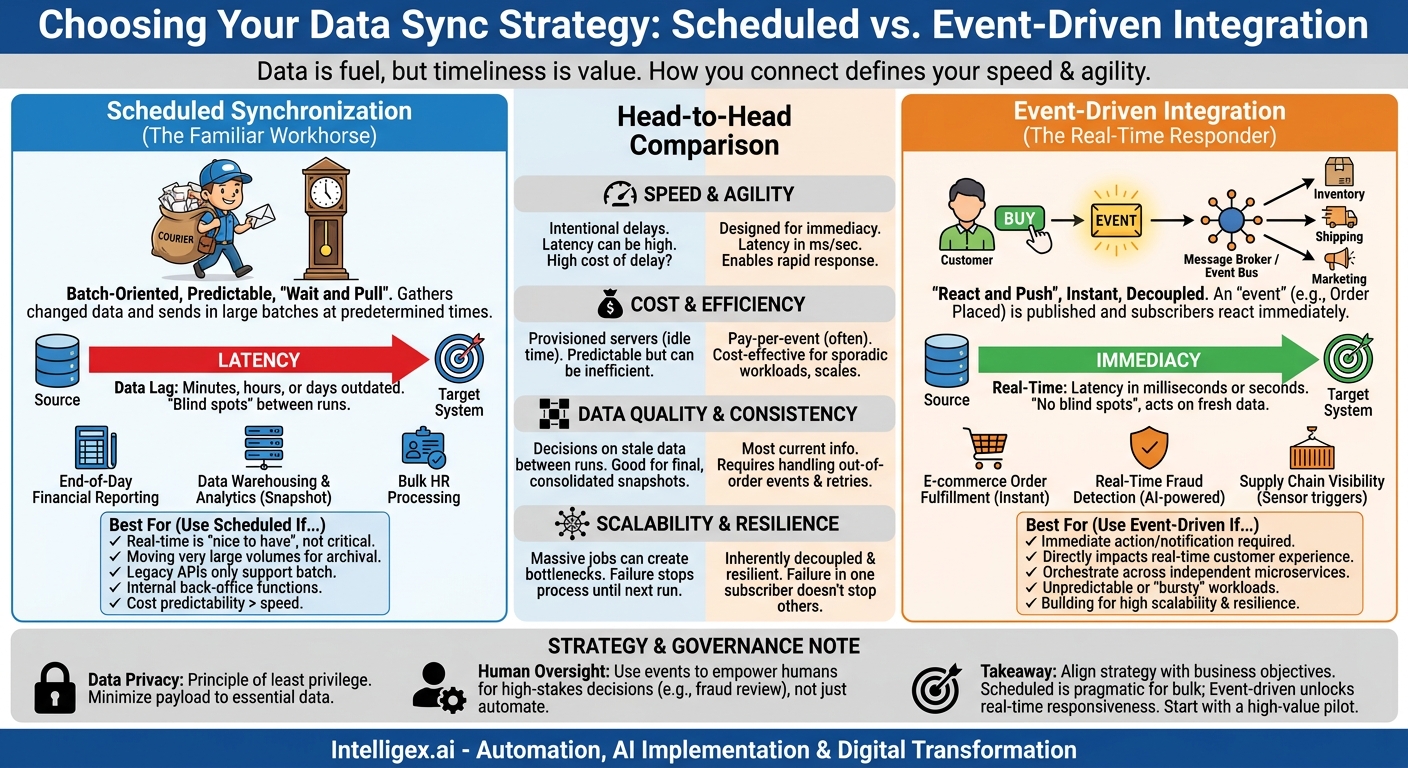
Batch vs. Real-Time: A Practical Guide to Choosing Your Data Sync Strategy

27 April 2026|Automation, Integration & Workflow Design|

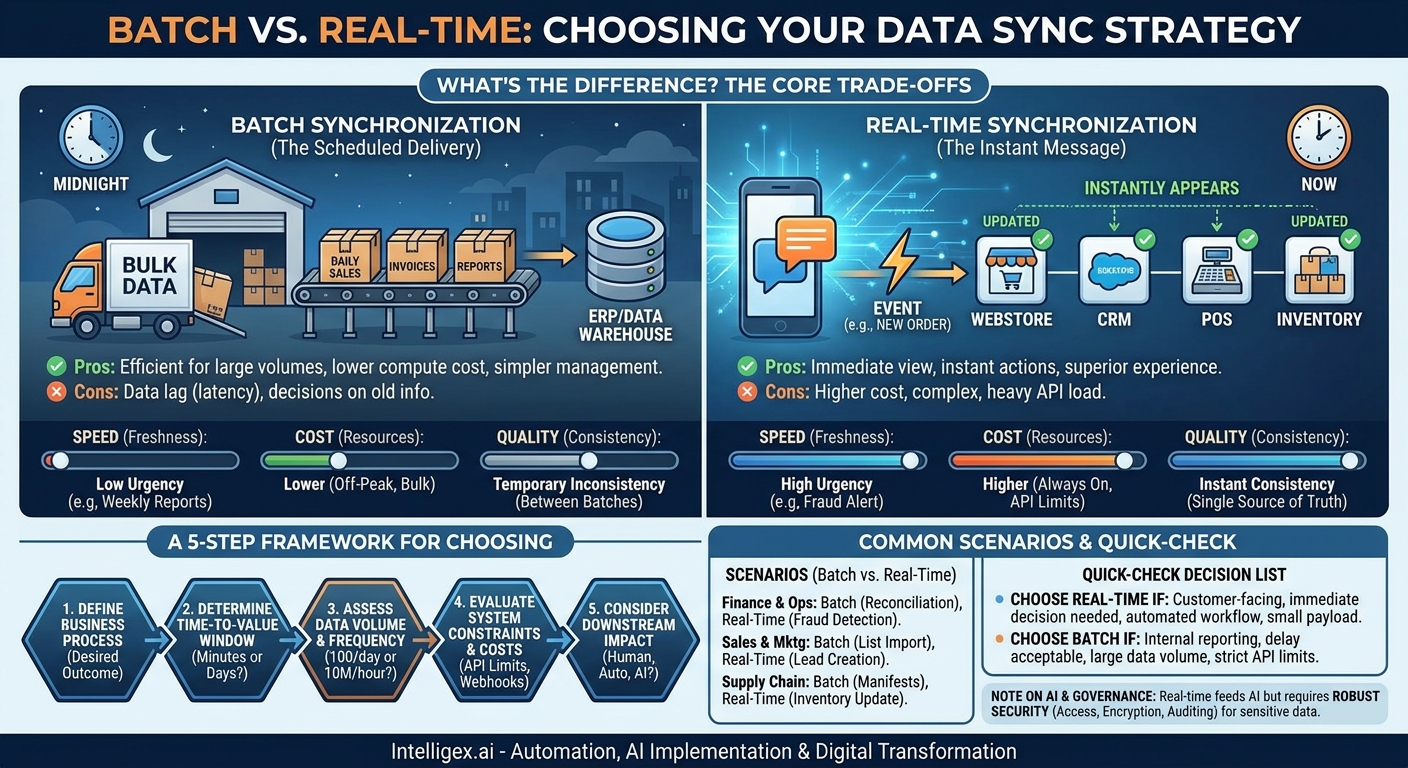
When business data is siloed across systems, data synchronization becomes essential for efficiency. The most critical decision is choosing between batch and real-time methods, a choice that impacts costs, operational speed, and customer experience. This guide provides a business-focused framework for evaluating the trade-offs of each approach to help you make the right strategic investment for your company.

Batch vs. Real-Time: A Practical Framework for Choosing Your Data Sync Strategy

27 April 2026|Automation, Integration & Workflow Design|

Choosing between batch and real-time data synchronization is a critical business decision that impacts everything from customer experience to operational efficiency. This guide moves beyond technical jargon to provide a practical framework for selecting the right approach for your specific needs. Learn to evaluate factors like data freshness, volume, and system impact to ensure your data delivers maximum business value.

How to Plan Your Transition from Manual Imports to Automated Data Syncs

27 April 2026|Automation, Integration & Workflow Design|

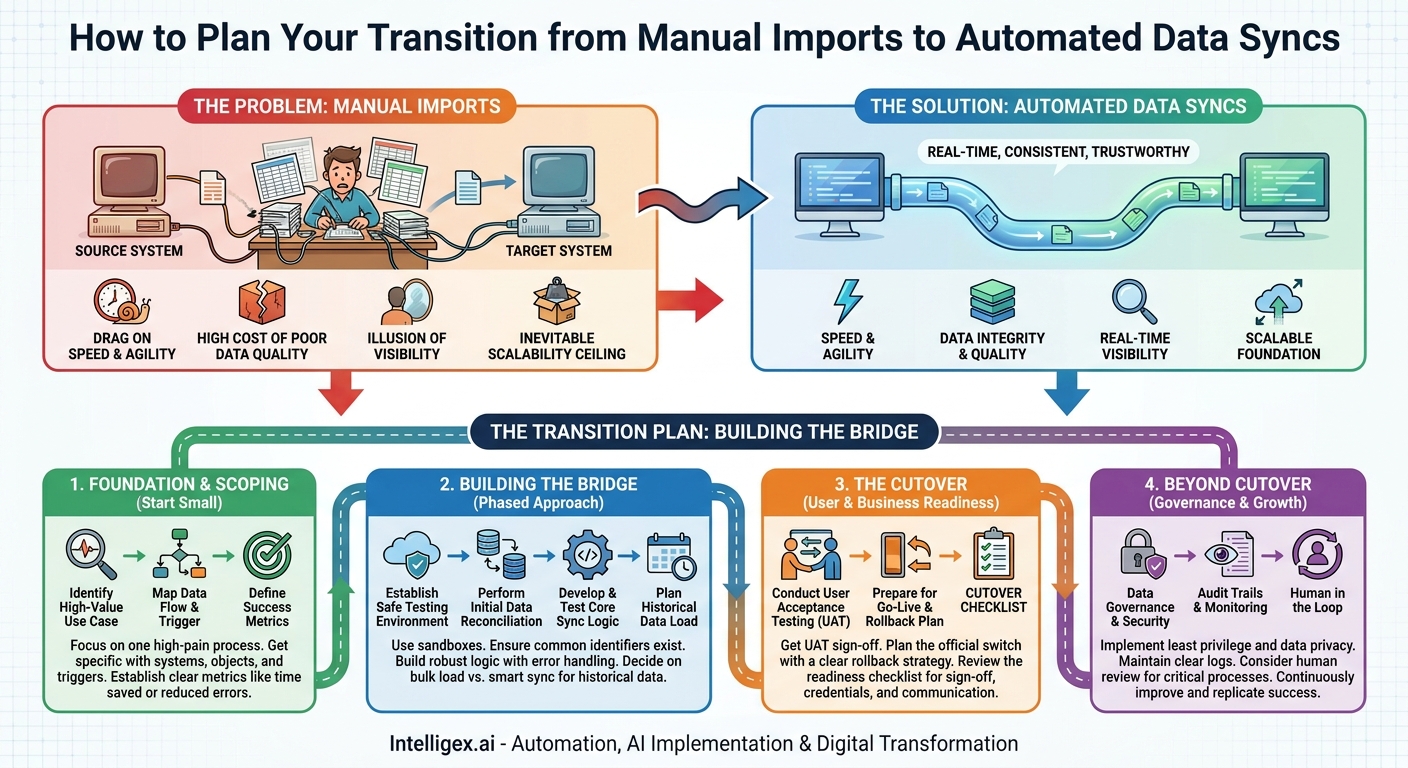
The routine of manual data imports seems productive, but it silently introduces significant costs, risks, and scalability ceilings. This article outlines the systemic problems with manual processes and provides a detailed, step-by-step cutover plan for transitioning to automated data synchronization. By following a structured approach, you can replace brittle workflows with a resilient, scalable, and data-driven foundation for growth.

Stop the CSV shuffle: A practical guide to automating your data imports

27 April 2026|Automation, Integration & Workflow Design|

The routine task of manually importing and exporting data, or the 'CSV shuffle,' silently drains resources and introduces critical errors. Moving to an automated data sync requires a deliberate plan to manage the transition effectively. This guide provides a step-by-step framework for planning and executing a successful cutover, helping you improve data quality, increase operational speed, and unlock strategic value.

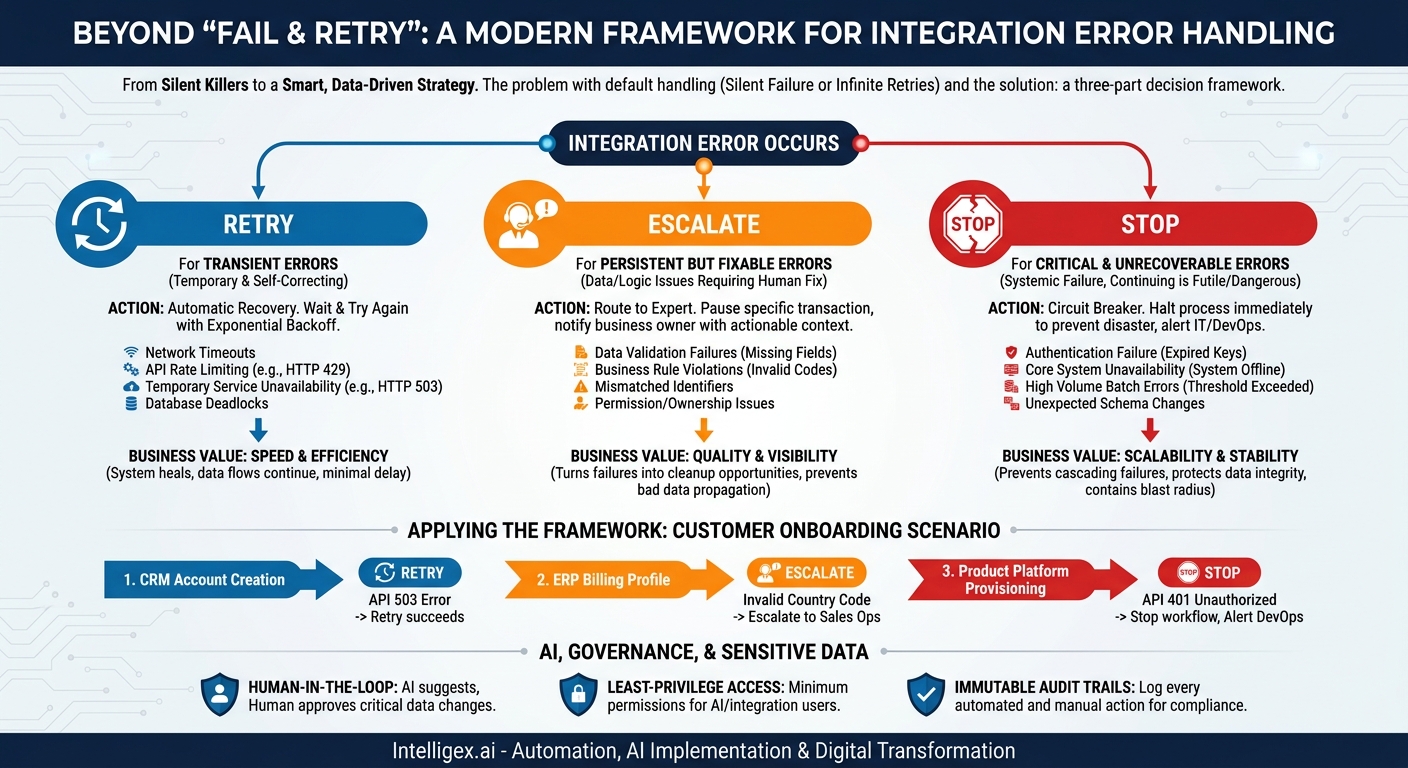
Retry, Escalate, or Stop: A Framework for Resilient Data Synchronization

27 April 2026|Automation, Integration & Workflow Design|

A failed data synchronization job can quickly snowball from a minor technical glitch into a major business problem, causing lost revenue and eroding trust in your data. This article provides a strategic framework for handling these failures by deciding whether to automatically retry, escalate for human review, or stop the process entirely. By implementing this approach, you can build more resilient, scalable data pipelines and protect the integrity of the data that drives your decisions.

Beyond ‘Fail and Retry’: A Modern Framework for Integration Error Handling

27 April 2026|Automation, Integration & Workflow Design|

Default error handling in data integration often fails silently or retries indefinitely, creating hidden costs and eroding data quality. This article introduces a more intelligent framework built on three core actions: Retry for temporary glitches, Escalate for fixable data issues, and Stop for critical failures. Adopting this strategy allows you to build resilient, efficient, and transparent automated processes that protect data integrity and improve operational visibility.

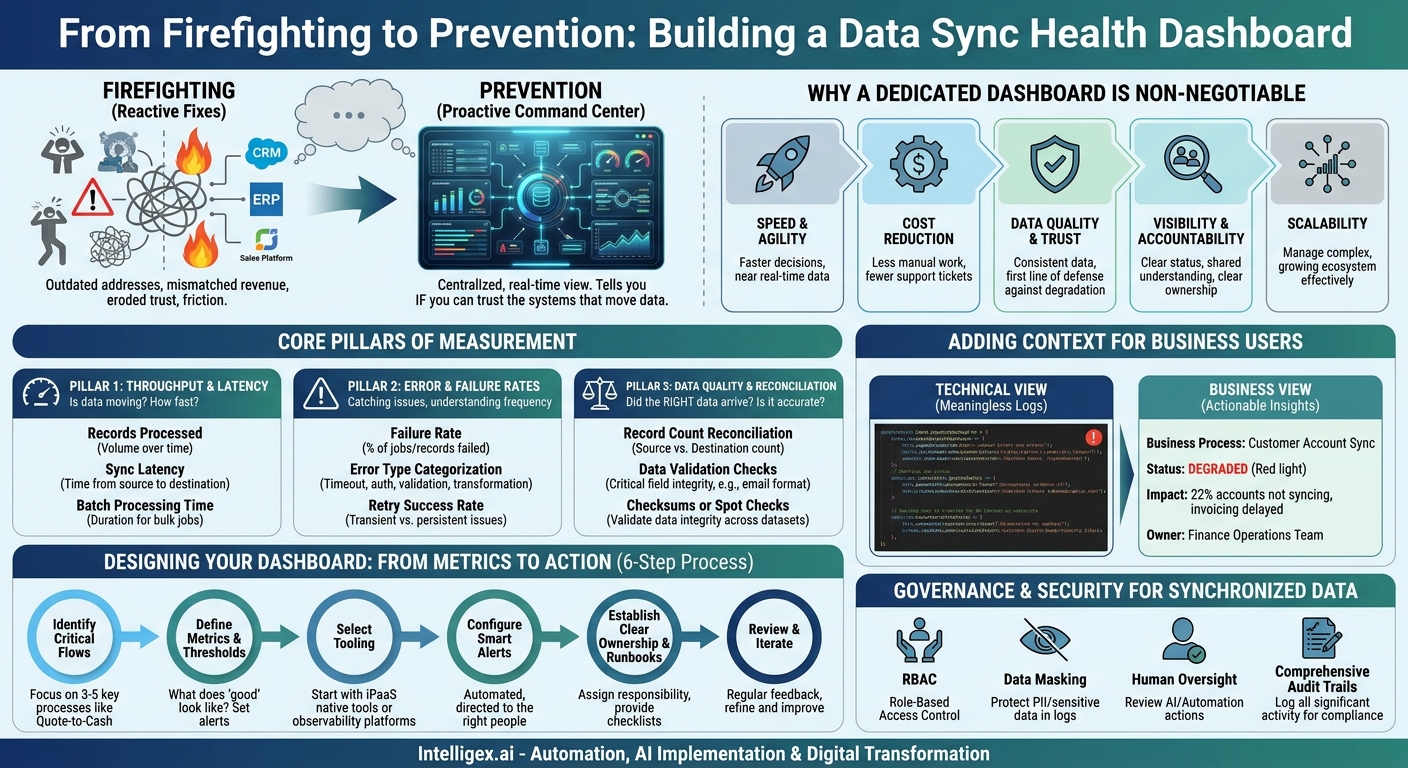
How to Prevent Costly Business Disruptions with a Data Sync Health Dashboard

27 April 2026|Automation, Integration & Workflow Design|

Failures in data synchronization between critical systems like your CRM and ERP can cause expensive, silent business disruptions. The solution is to move from a reactive to a proactive approach by implementing a centralized data sync health dashboard. This provides real-time visibility into your data pipelines, allowing you to quickly resolve issues, reduce manual reconciliation costs, and build trust in your operational data.

From Firefighting to Prevention: How to Build a Data Sync Health Dashboard

26 April 2026|Automation, Integration & Workflow Design|

Unreliable data synchronization between critical applications leads to costly errors and manual rework. A Data Sync Health Dashboard provides a centralized, real-time view of your data pipelines, moving you from reactive firefighting to proactive prevention. This article outlines how to build an effective dashboard to monitor data flows, diagnose issues, and ensure the data powering your business is accurate and trustworthy.

Choosing Your Data Sync Strategy: A Guide to Scheduled vs. Event-Driven Integration

26 April 2026|Automation, Integration & Workflow Design|

The value of business data hinges on its timeliness, yet traditional scheduled synchronization often creates costly data lag. This article provides a comprehensive comparison between batch processing and modern, real-time event-driven architecture. Understanding the distinct business implications, use cases, and technical trade-offs of each approach will enable you to choose the right integration strategy to build a more responsive and efficient enterprise.

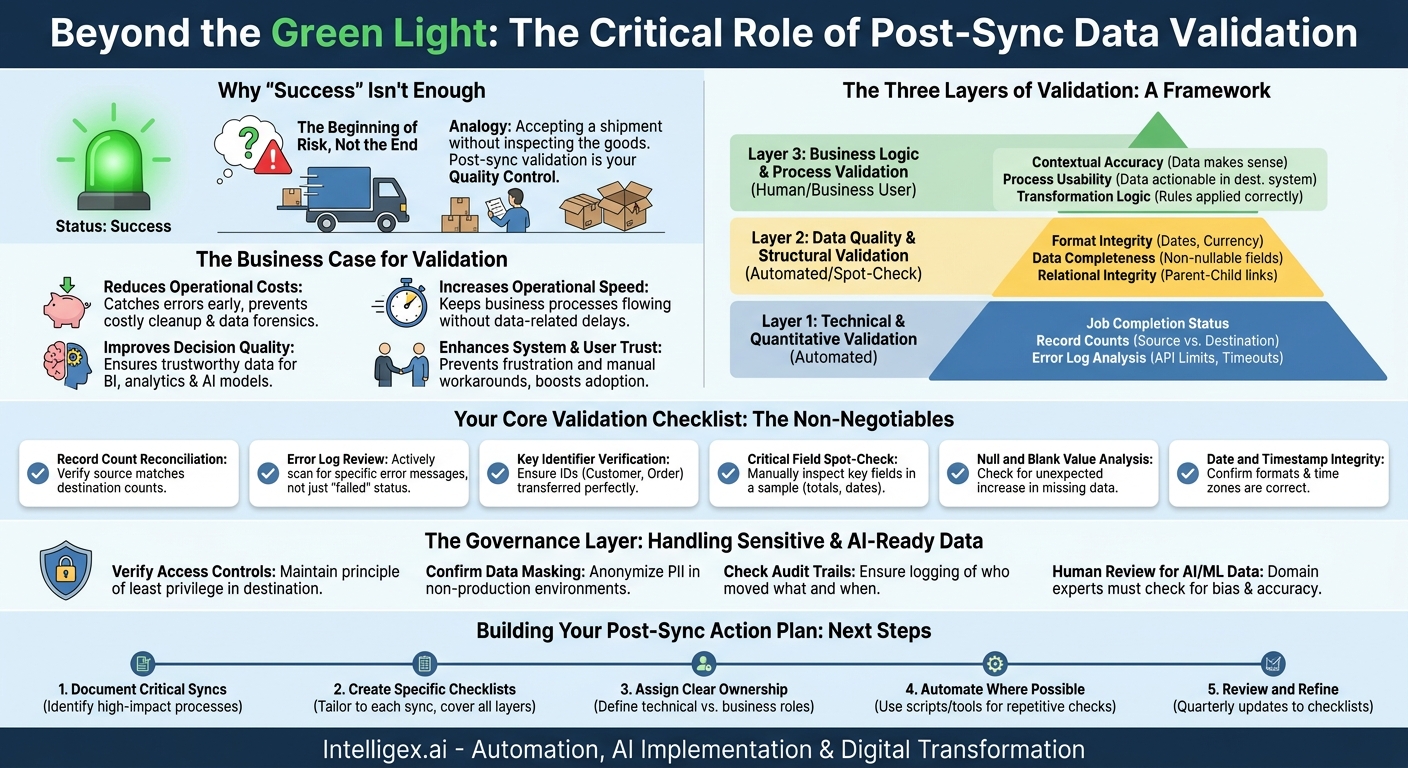
Beyond the Green Light: A Guide to Post-Sync Data Validation

26 April 2026|Automation, Integration & Workflow Design|

A technically successful data sync often hides critical flaws, as it doesn't guarantee the data is correct, complete, or usable. This guide outlines a comprehensive three-layer framework for post-sync validation, covering technical checks, data quality inspection, and business logic verification. Implementing this process is essential for preventing costly downstream errors, improving decision quality, and building trust in your integrated systems.

Go to Top