
Intelligex Logo
Intelligex Logo
Get A Consultation

Automation, Integration & Workflow Design

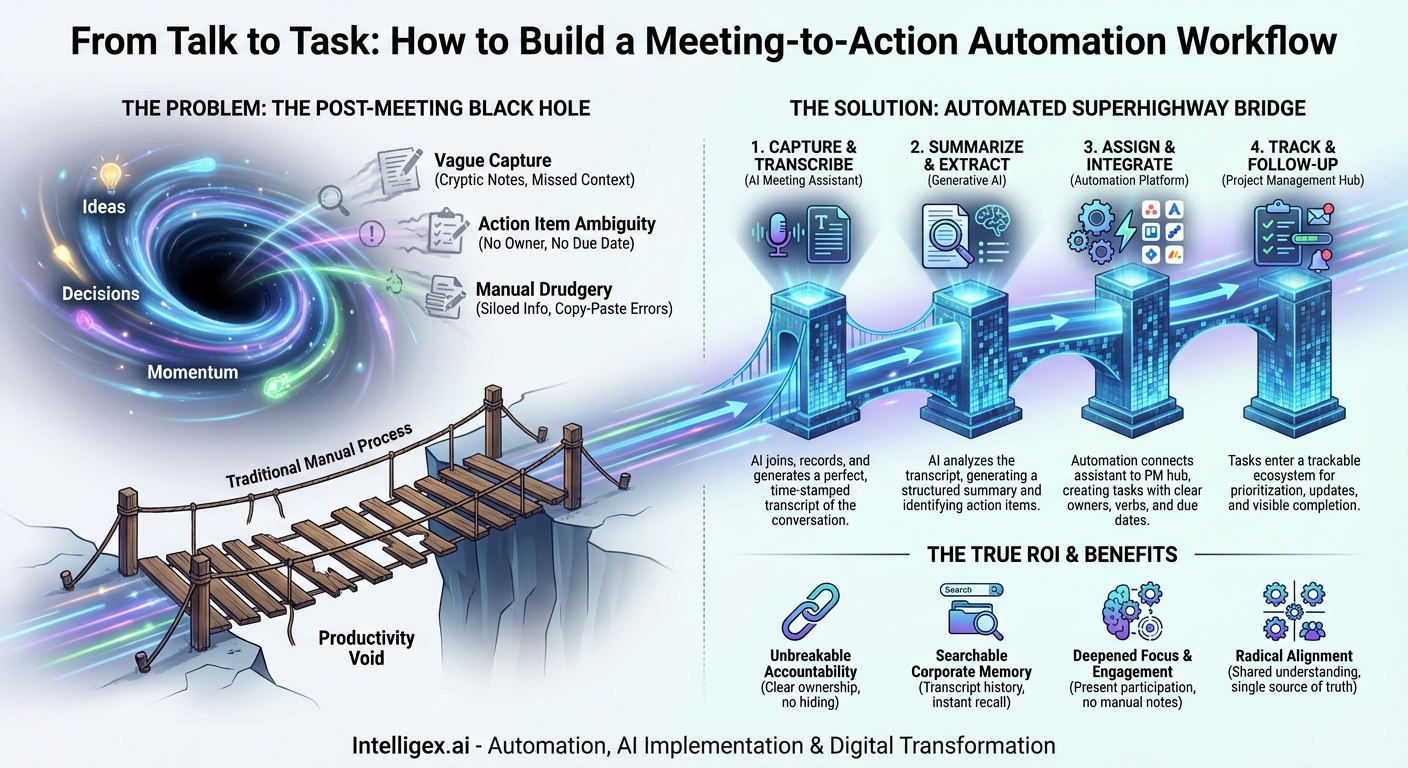
From Talk to Task: How to Build a Meeting-to-Action Automation Workflow

5 March 2026|Automation, Integration & Workflow Design|

Meetings often end with great ideas that quickly fade into ambiguity, a problem known as 'meeting amnesia.' This guide introduces the Meeting-to-Action Automation Workflow, a systematic approach using AI transcription tools and platforms like Zapier to solve this. By automatically converting discussions into trackable tasks in your project management system, you can ensure accountability and transform conversations into concrete progress.
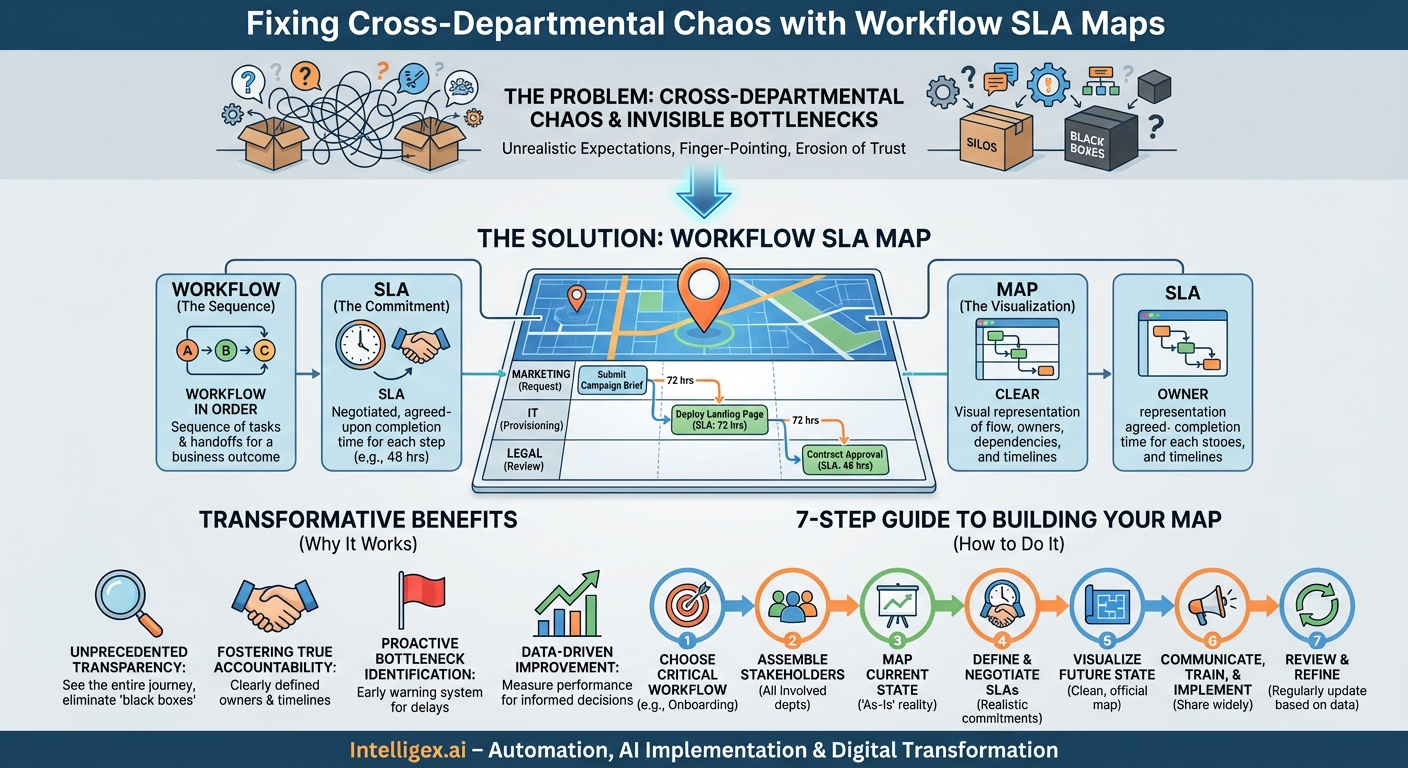
A Step-by-Step Guide to Fixing Cross-Departmental Chaos with Workflow SLA Maps

28 February 2026|Automation, Integration & Workflow Design|

Cross-departmental friction and process delays often stem from a lack of shared understanding and accountability between teams. By implementing a Workflow SLA Map, organizations can visually document processes, assign ownership, and set clear time-based commitments (SLAs) for each step. This transforms chaotic handoffs into a transparent, predictable system that fosters collaboration and enables data-driven process improvement.

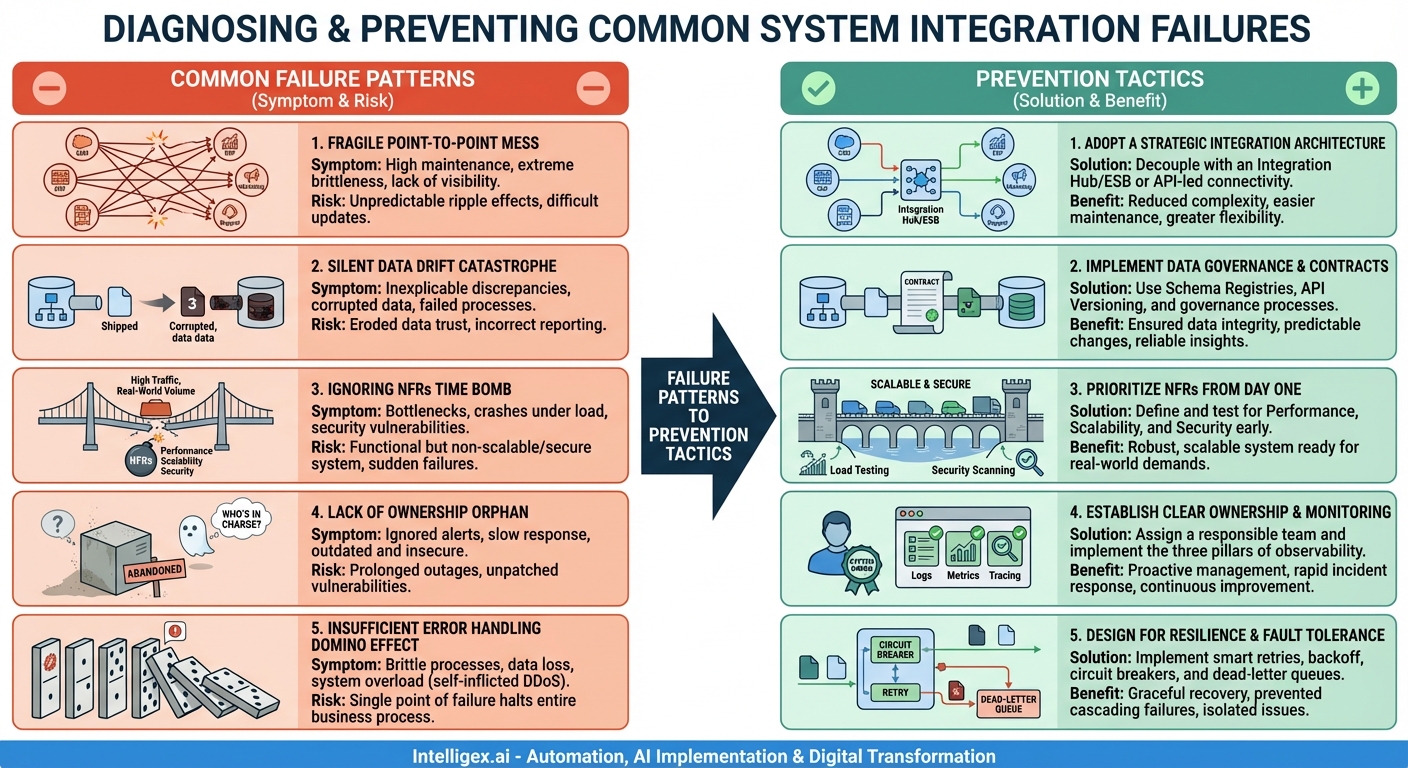
Diagnosing and Preventing the 5 Most Common System Integration Failure Patterns

26 February 2026|Automation, Integration & Workflow Design|

System integration is the central nervous system of a modern enterprise, but its complexity often leads to failures that create organizational chaos. This article diagnoses the five most common and destructive integration failure patterns, such as fragile point-to-point messes and silent data drift. By understanding the anatomy of these failures, you can apply proven prevention tactics to build resilient, valuable, and reliable connections between your critical business systems.

AI-Powered Customer Support Ticket Triage

24 February 2026|Automation, Integration & Workflow Design|

In the world of customer support, the ticket queue is a relentless, ever-growing beast. For many organizations, the first line of defense is a manual triage process that is buckling under modern pressure. Today, a new force is stepping in to tame the chaos: Artificial Intelligence. AI is not just improving ticket triage; it's fundamentally reinventing it, transforming it from a bottleneck into a high-speed, intelligent gateway to exceptional customer service.

Building a Lead Qualification Automation Decision Tree

24 February 2026|Automation, Integration & Workflow Design|

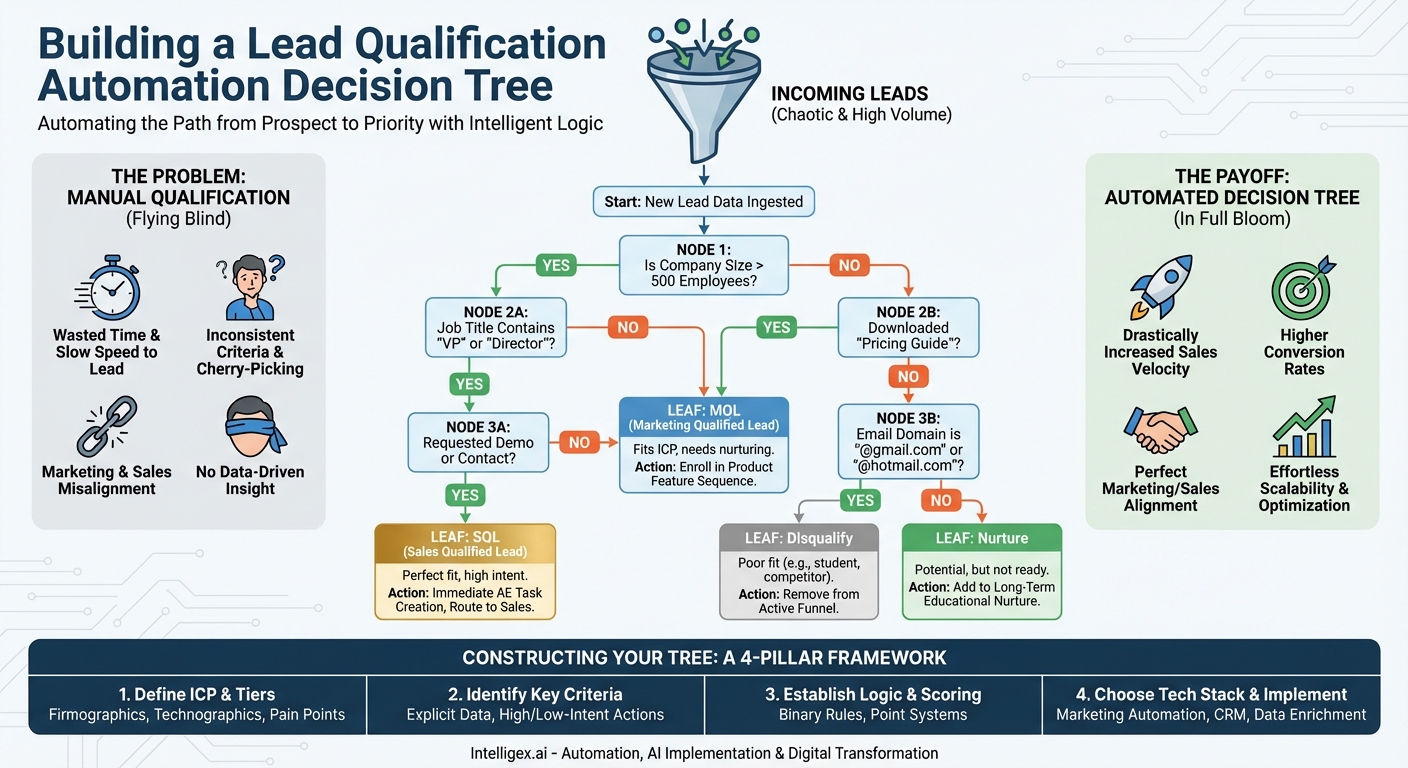
The traditional solution to sorting leads has been manual qualification, a process heavily reliant on a salesperson's intuition and time. But in today's high-velocity environment, this manual approach is a critical bottleneck. It’s inconsistent, slow, and simply doesn't scale. What if you could build an automated, intelligent gatekeeper that stands guard at the top of your funnel? This is the power of a Lead Qualification Automation Decision Tree, a strategic framework that transforms your lead management from a chaotic free-for-all into a streamlined, revenue-generating machine.

Building a Seamless Marketing to Sales Lead Handoff Pipeline with RevOps

24 February 2026|Automation, Integration & Workflow Design|

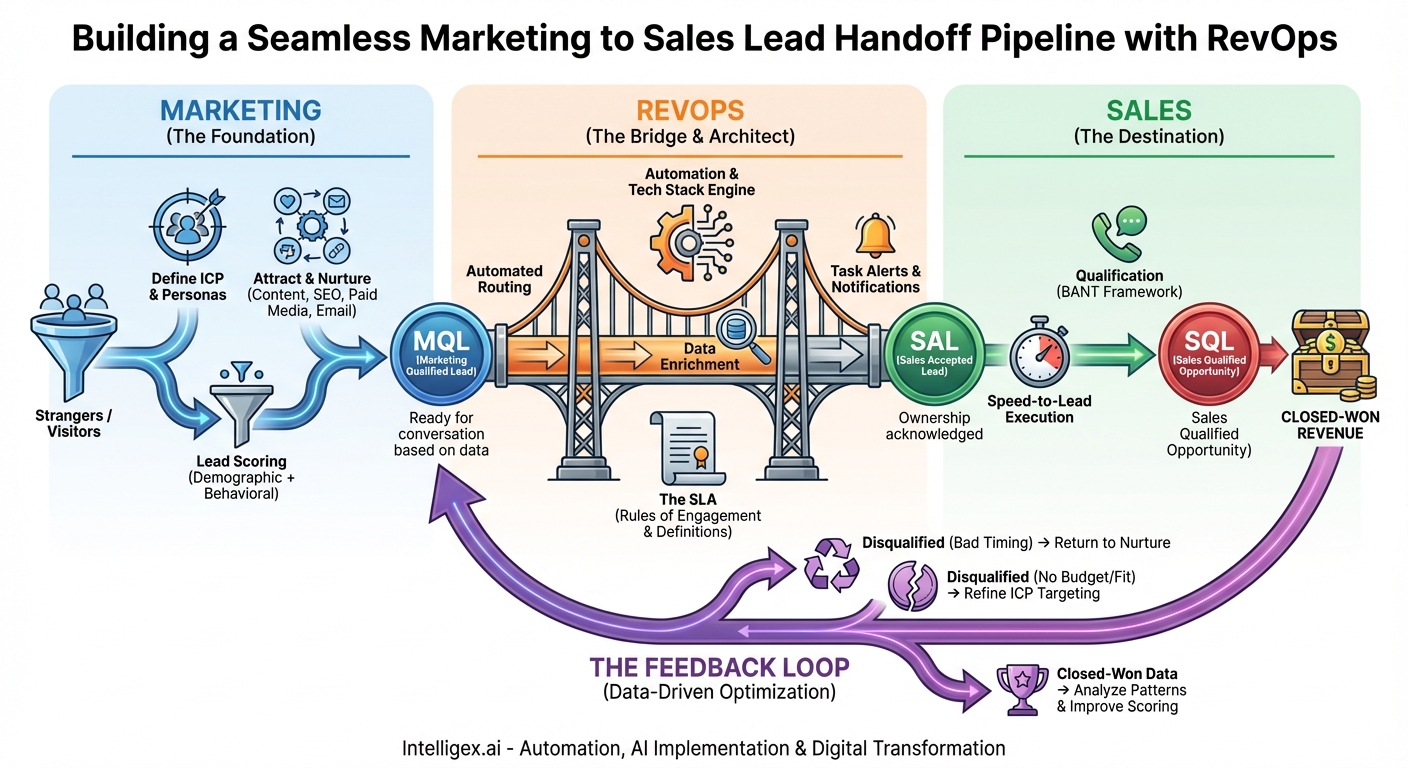
The journey from a curious website visitor to a loyal, paying customer is not a straight line. It's a complex, multi-stage pipeline fraught with potential pitfalls. One of the most common and costly points of failure is the handoff—that critical moment when a lead, lovingly nurtured by marketing, is passed to the sales team. Too often, this exchange resembles a hurried toss over a high wall, with leads getting dropped, lost, or ignored in the process. This "leaky bucket" syndrome is where potential revenue vanishes into a void of miscommunication and process gaps. The solution? A meticulously designed handoff pipeline, orchestrated not by two, but by three key players: Marketing, Revenue Operations (RevOps), and Sales.

The Strategic Advantage of Cross-System Onboarding Automation

23 February 2026|Automation, Integration & Workflow Design|

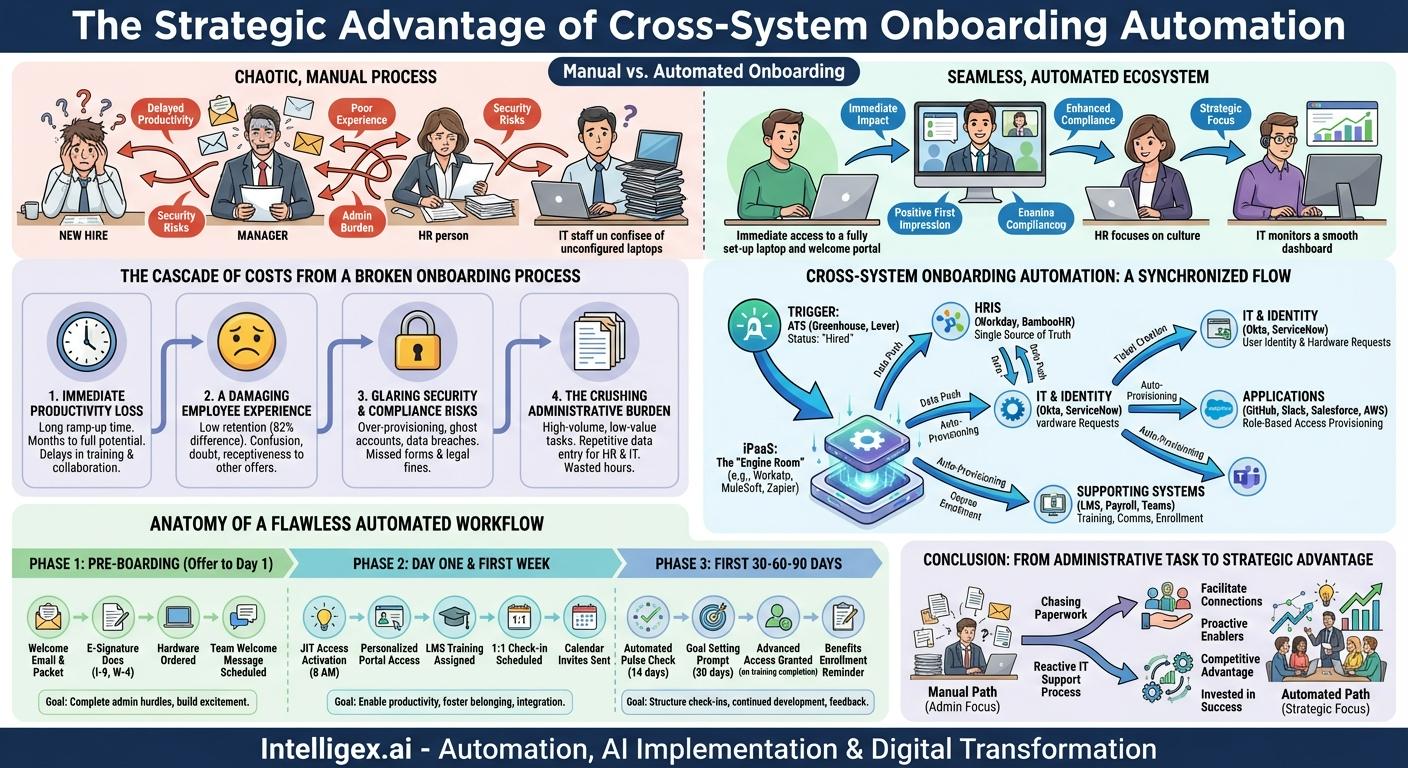
The scene is all too familiar in many organizations. A new hire arrives on their first day, bright-eyed and eager, only to find their laptop isn't ready, they can't access their email, and their manager is frantically trying to figure out which systems they need access to. HR is buried under a mountain of paperwork, IT is playing catch-up on provisioning requests, and the new employee’s initial excitement begins to curdle into a feeling of disorganization and regret. This chaotic, manual approach to onboarding is more than just a bad first impression; it's a significant drain on resources, a security risk, and a direct threat to employee retention. In today's competitive talent market, a disjointed onboarding experience is a luxury no company can afford. The solution lies in moving beyond simple digital checklists and embracing true, end-to-end employee onboarding automation that flows seamlessly across every critical business system.

Automating the Procurement Intake-to-Approval Process

23 February 2026|Automation, Integration & Workflow Design|

In countless organizations, the journey of a purchase request is a winding, frustrating path. It begins with an email, a hastily filled-out spreadsheet, or even a conversation in the hallway. From there, it enters a black box of approvals, forwarded from one inbox to another, often getting lost or stalled without a clear status update. This manual, disjointed process isn’t just inefficient; it’s a significant drain on productivity, a source of employee frustration, and a major risk for maverick spend and non-compliance.

A Guide to Automating AP and AR Workflows

23 February 2026|Automation, Integration & Workflow Design|

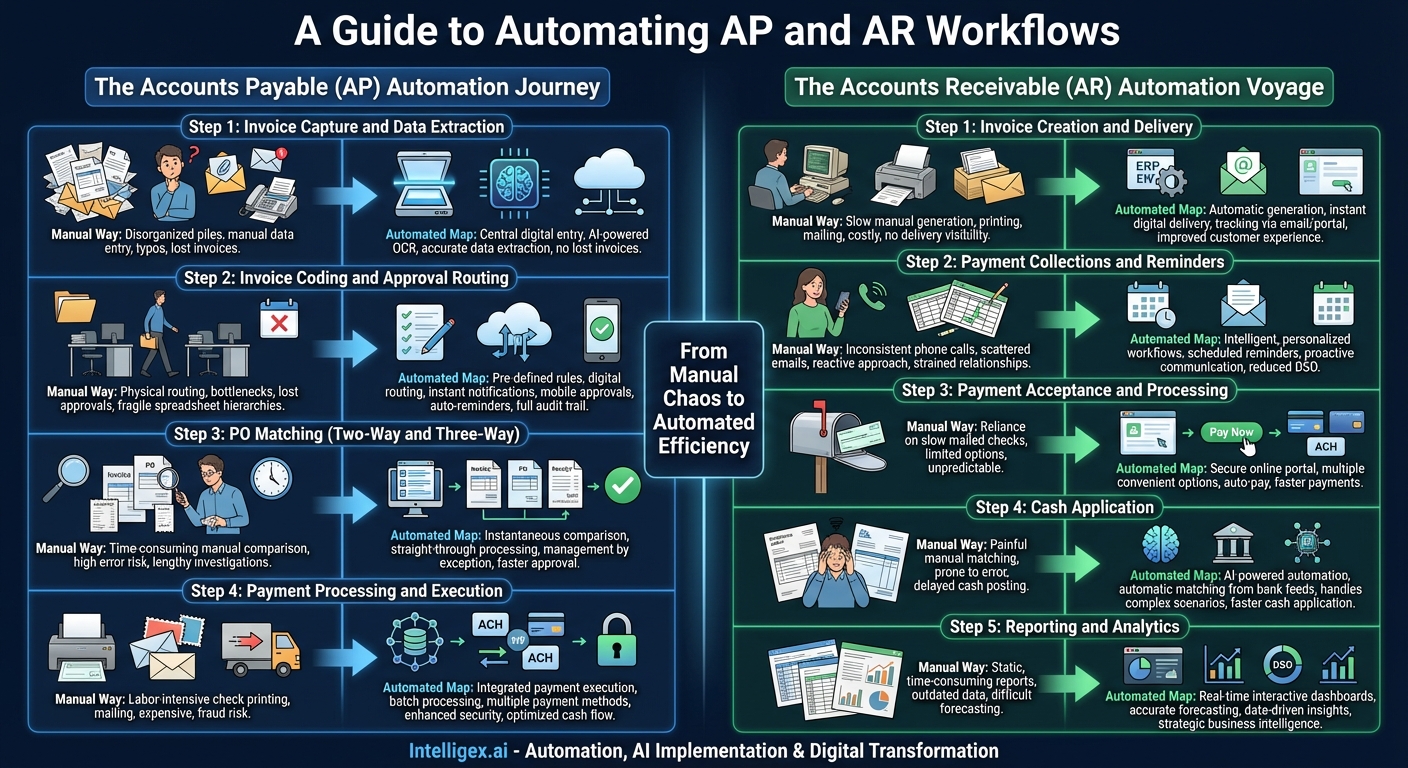
The solution lies in automation. By creating a clear workflow map, businesses can visualize the journey from manual chaos to automated efficiency. This map isn't just a technical diagram; it's a strategic blueprint for transforming your finance department from a reactive cost center into a proactive, data-driven powerhouse. Let's navigate the paths of both AP and AR automation to understand how each step of the traditional process is revolutionized.

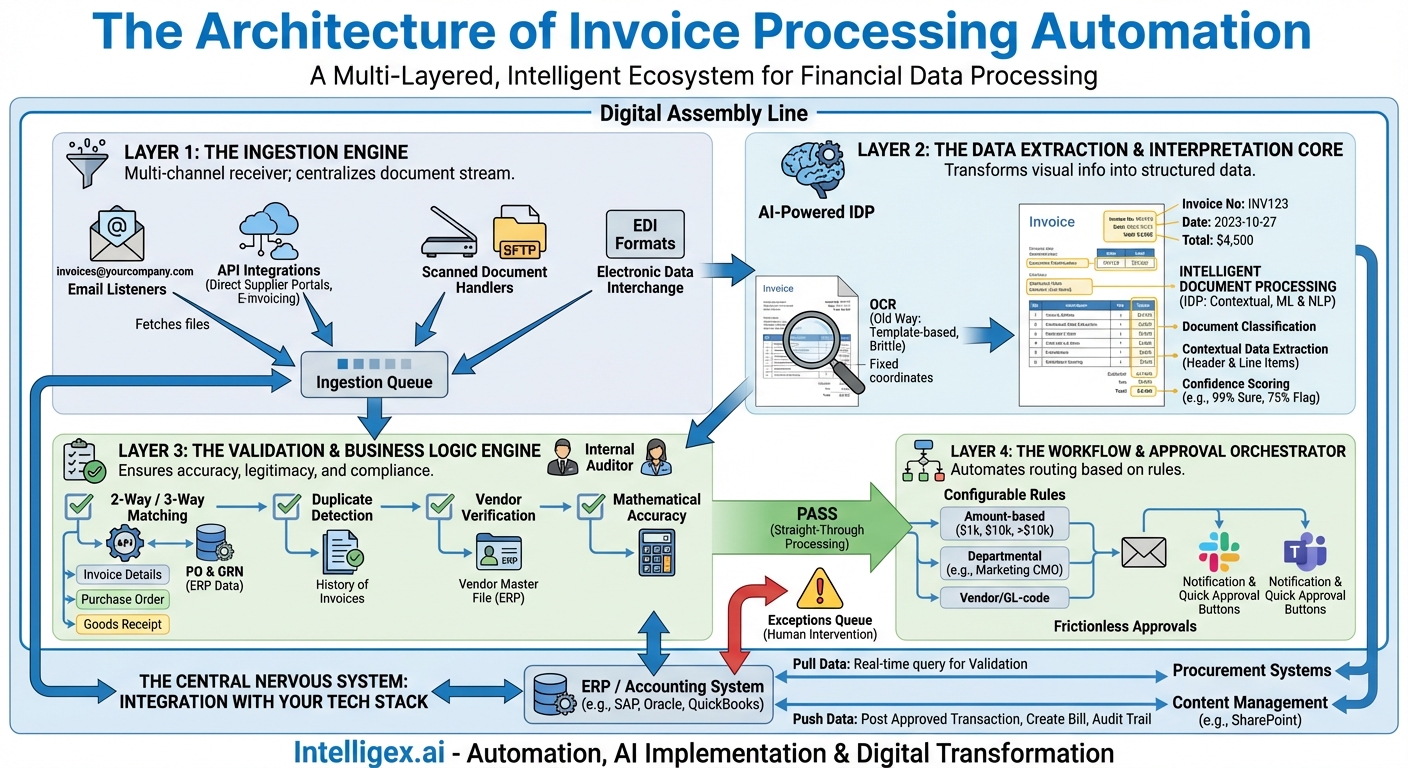
The Architecture of Invoice Processing Automation

23 February 2026|Automation, Integration & Workflow Design|

The relentless hum of the modern enterprise is data. Yet, in many organizations, the accounts payable (AP) department remains an outlier, a place where manual processes and paper documents still dictate the pace of business. The journey of an invoice, from its arrival to final payment, is often a winding, inefficient path fraught with potential for error, delay, and unnecessary cost. Invoice Processing Automation (IPA) offers a powerful solution, but to truly appreciate its transformative potential, we must look beyond the surface-level benefits and delve into its core architecture. Understanding the intricate system of technologies and workflows that power IPA reveals not just a tool, but a fundamental redesign of a critical business function.

Go to Top