Intelligex Logo
Intelligex Logo
Get A Consultation

AI Strategy & Governance

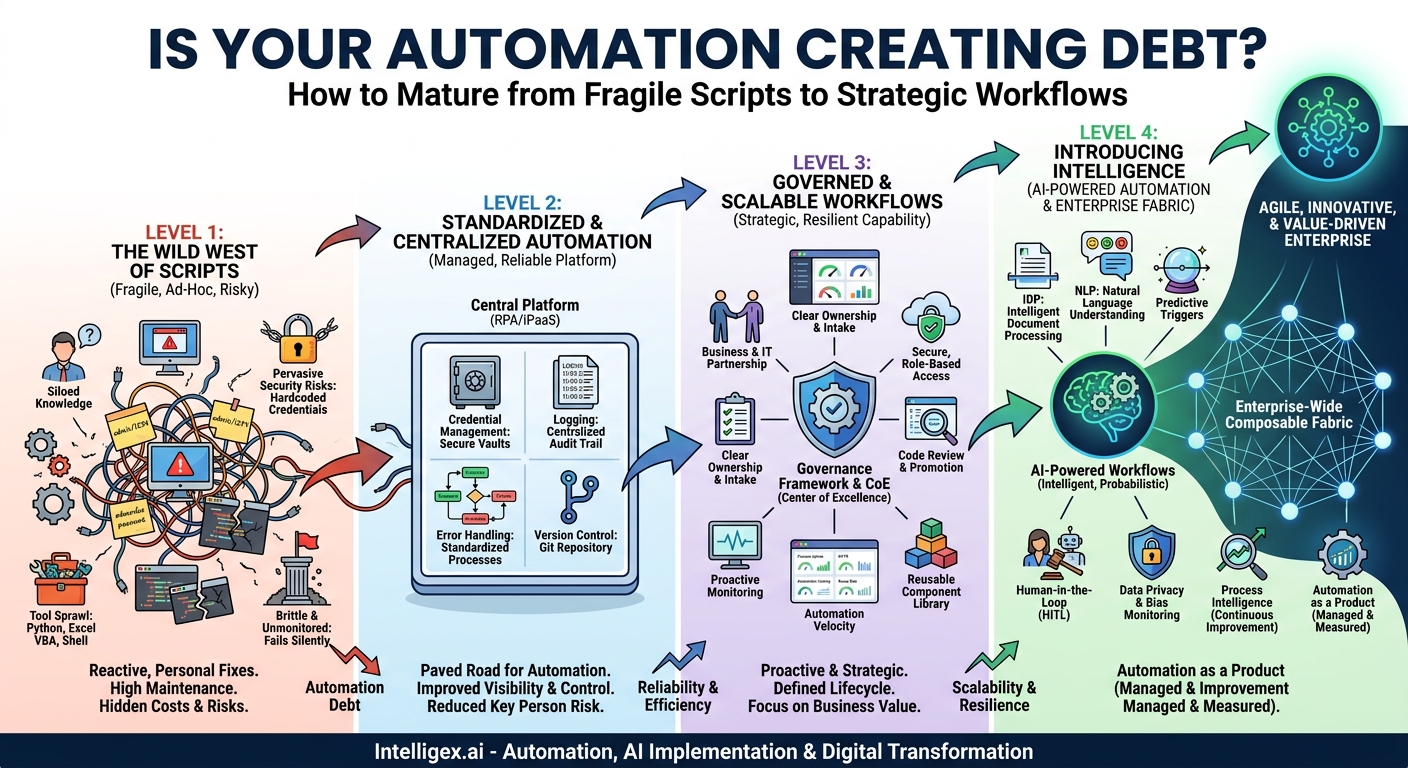
Is Your Automation Creating Debt? How to Mature from Fragile Scripts to Strategic Workflows

28 April 2026|AI Strategy & Governance|

Many organizations struggle with a chaotic patchwork of personal scripts and macros, creating hidden risks and long-term automation debt. This article provides a practical guide to automation maturity, outlining the journey from fragile, ad-hoc tasks to a governed and scalable enterprise capability. By following this path, you can transform automation from a source of technical debt into a strategic asset that delivers reliability, visibility, and lasting business value.
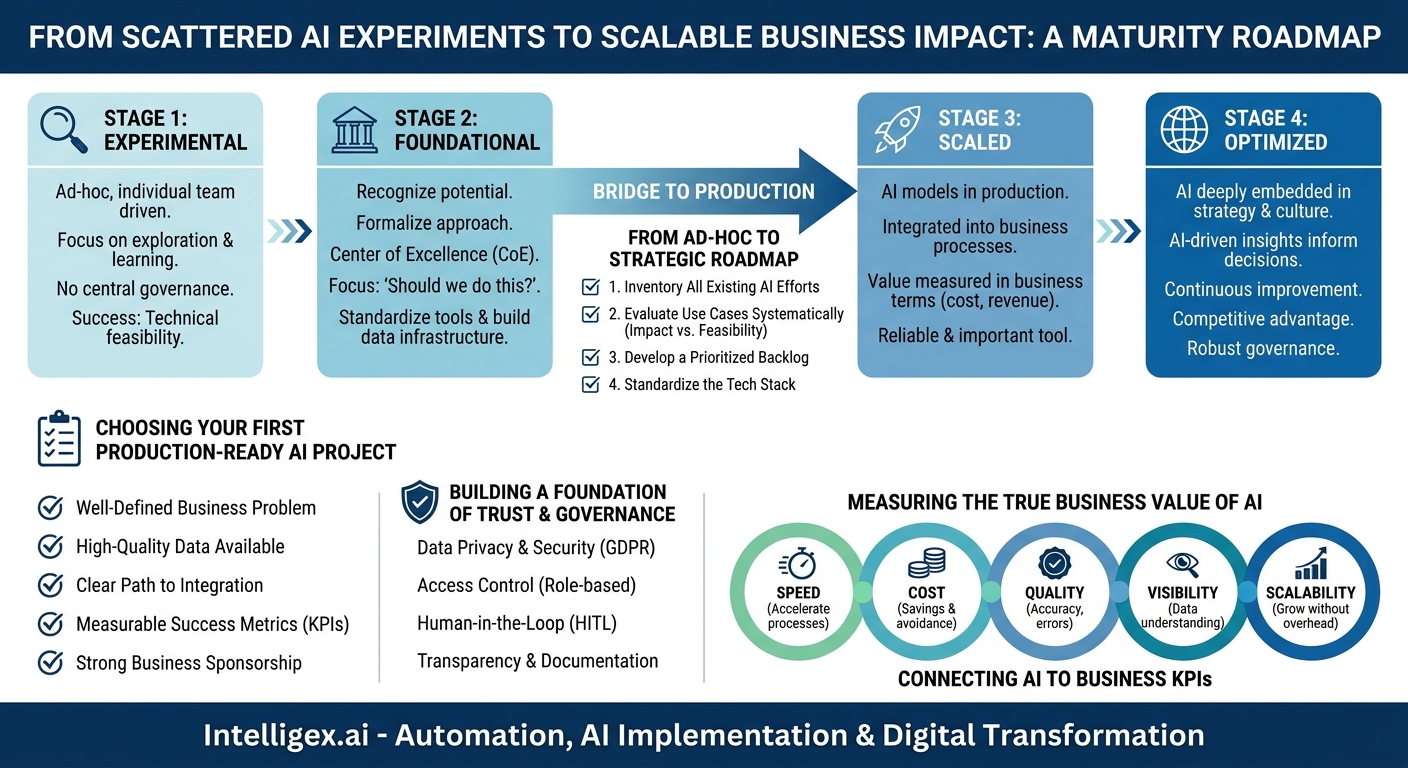
From Scattered AI Experiments to Scalable Business Impact: A Maturity Roadmap

28 April 2026|AI Strategy & Governance|

Many organizations struggle to move beyond isolated AI experiments to achieve scalable business impact. This guide provides a practical framework for navigating the four stages of AI adoption maturity, from ad-hoc tests to fully optimized, production-level systems. Learn how to build a strategic roadmap, select your first high-value project, and measure the true business value of your AI initiatives.

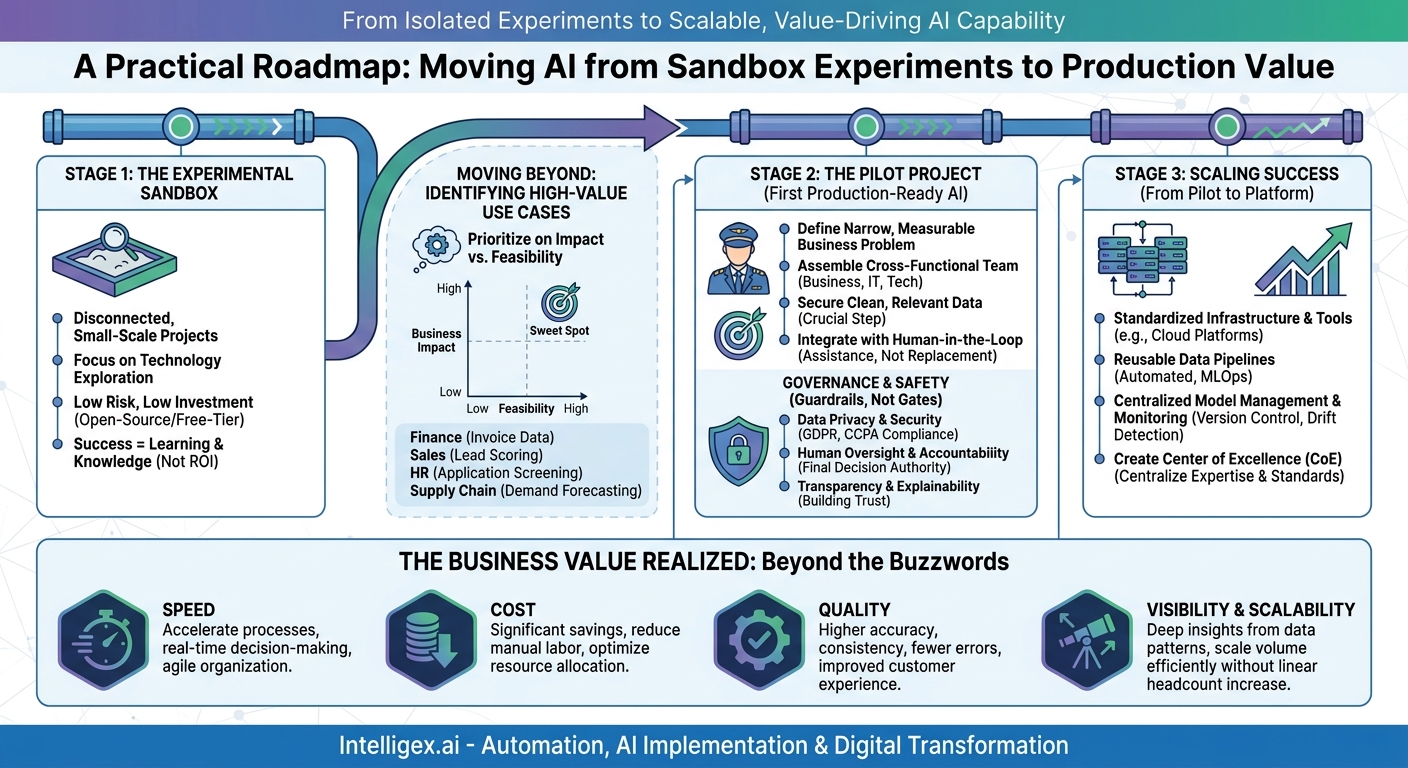
A Practical Roadmap: Moving AI from Sandbox Experiments to Production Value

28 April 2026|AI Strategy & Governance|

While many organizations experiment with AI, few successfully move it into production where it can deliver tangible business value. This guide provides a practical roadmap for navigating the AI maturity journey, from identifying high-impact use cases to launching a successful pilot project. By following these steps, you can turn AI potential into production reality and build a scalable capability that drives significant business outcomes.

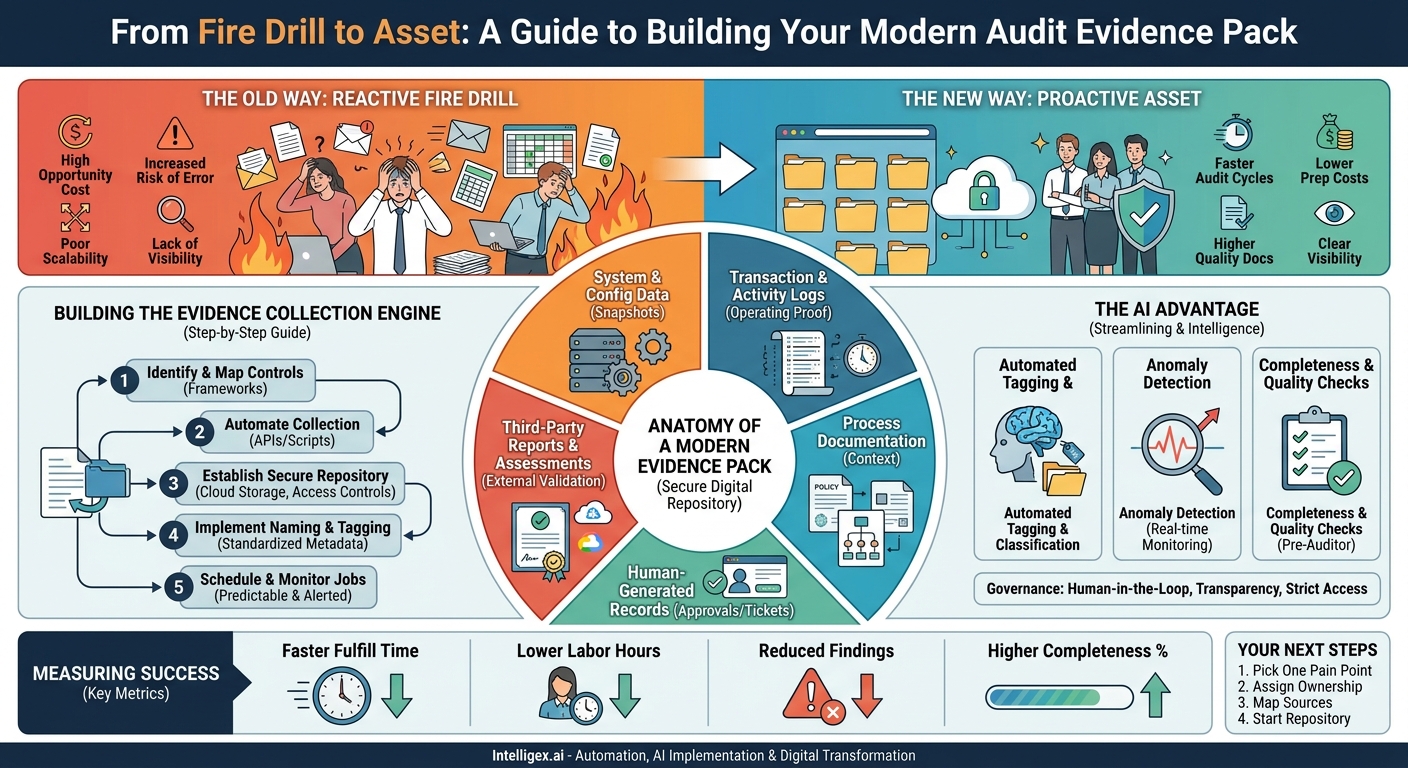
From Fire Drill to Asset: A Guide to Building Your Audit Evidence Pack

28 April 2026|AI Strategy & Governance|

The annual scramble for audit evidence is a costly fire drill that drains resources and increases operational risk. This article outlines a systematic approach for creating an automated audit evidence pack, transforming scattered artifacts into a structured asset. By implementing a continuous collection engine, organizations can achieve faster audit cycles, lower preparation costs, and operate with greater assurance year-round.

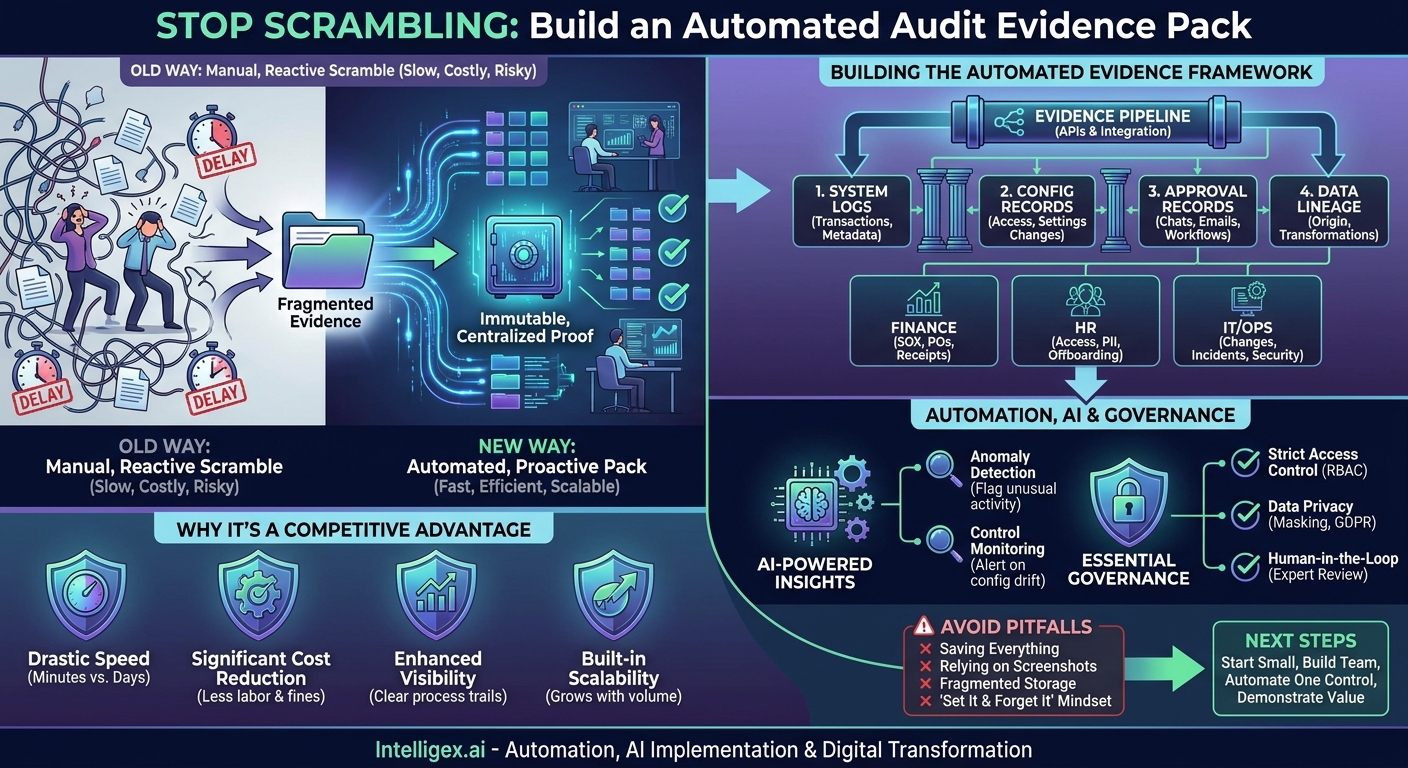
Stop Scrambling: How to Build an Automated Audit Evidence Pack

28 April 2026|AI Strategy & Governance|

Relying on manual, reactive evidence gathering for audits is slow, expensive, and risky. A modern audit evidence pack solves this by creating a dynamic, automated collection of digital proof from your core systems. This guide explains how to build this capability, transforming compliance from a painful event into a continuous function that boosts speed, cuts costs, and improves operational visibility.

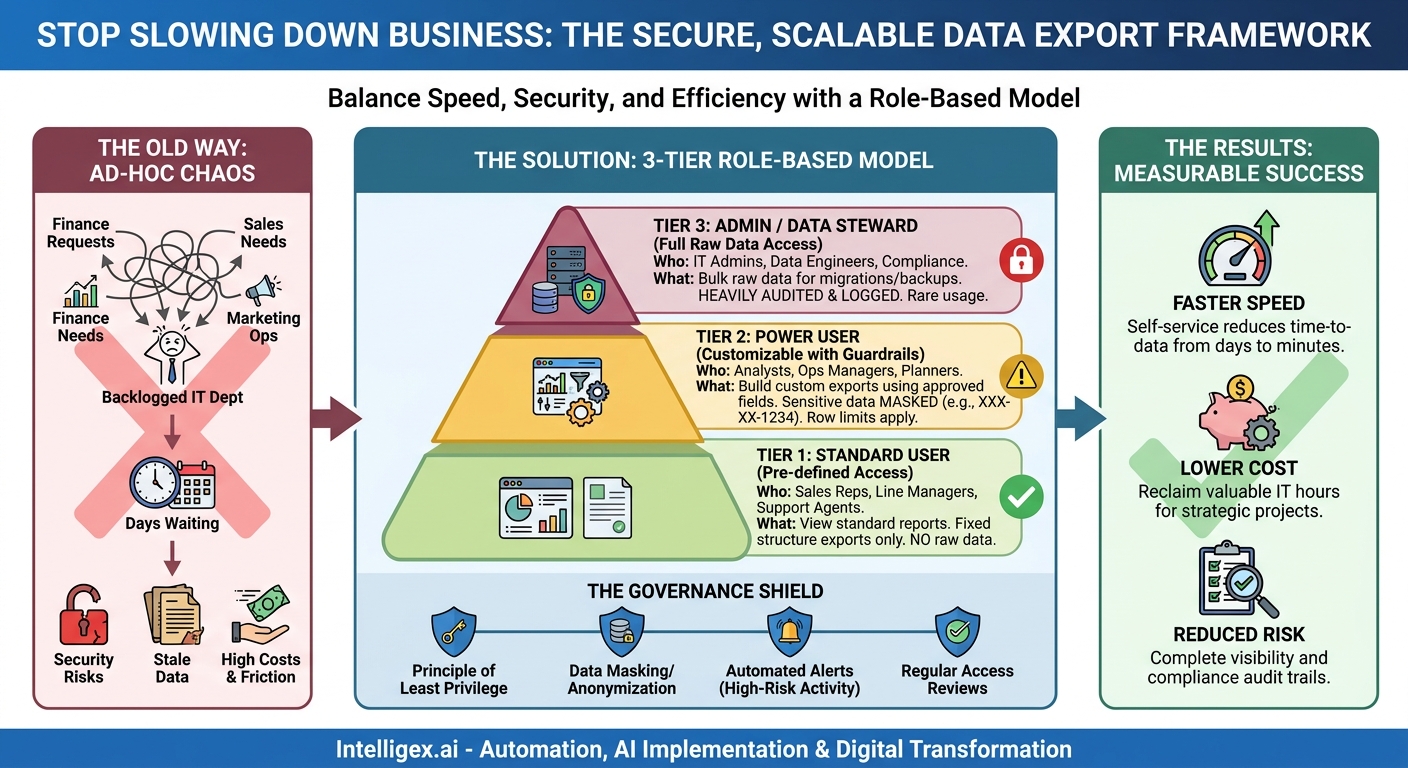
How to Manage Data Exports Without Slowing Down Your Business

28 April 2026|AI Strategy & Governance|

Uncontrolled data exports create security risks, while overly restrictive policies create business bottlenecks. This article introduces a practical, three-tier model for role-based data export management. By following this framework, you can empower your teams with timely data while strengthening security, ensuring compliance, and freeing up your technical resources for more strategic work.

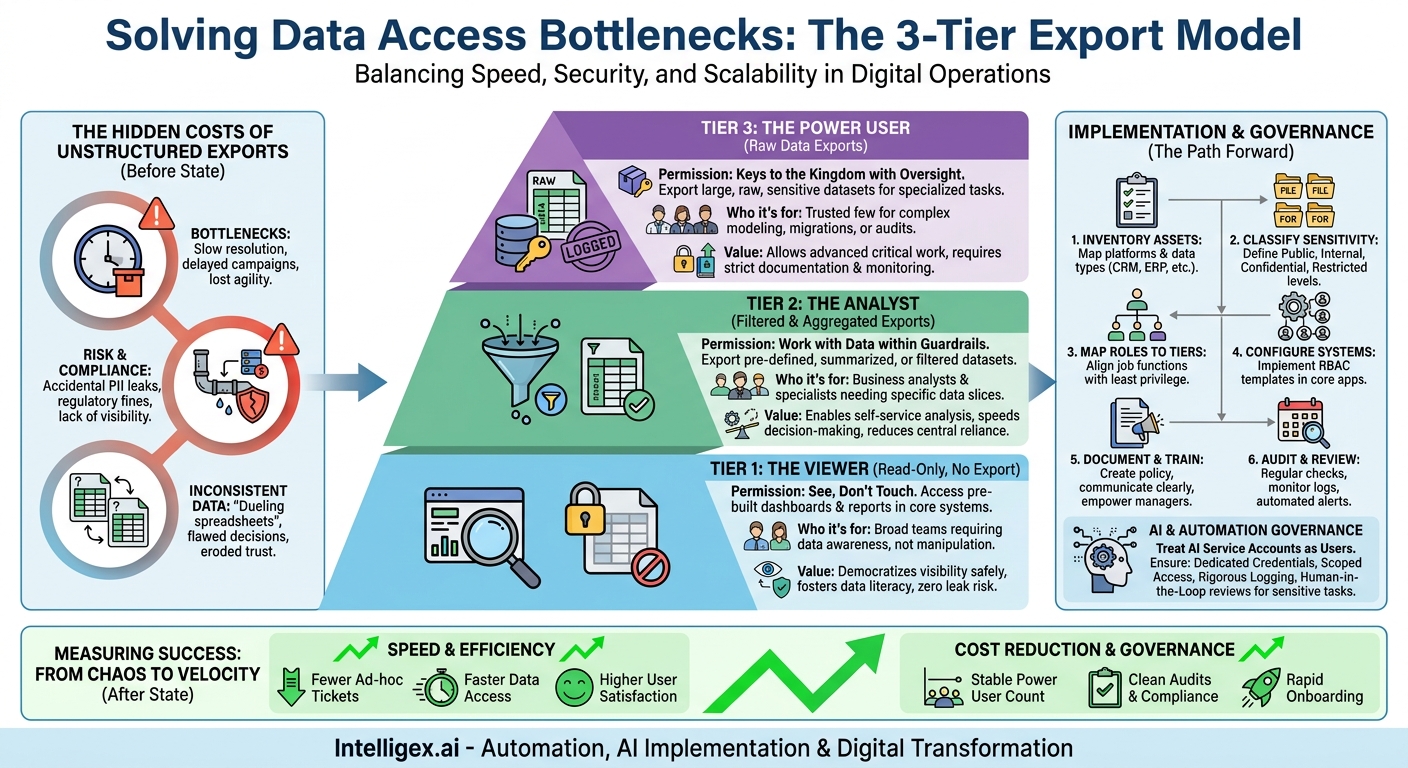
How to Solve Data Access Bottlenecks with a 3-Tier Export Model

28 April 2026|AI Strategy & Governance|

Constant data requests create operational bottlenecks and security risks. Instead of overly complex or permissive access, a simple three-tier model for export permissions provides a clear solution. This role-based framework empowers your teams with the data they need while maintaining strict governance, enhancing both business agility and security.

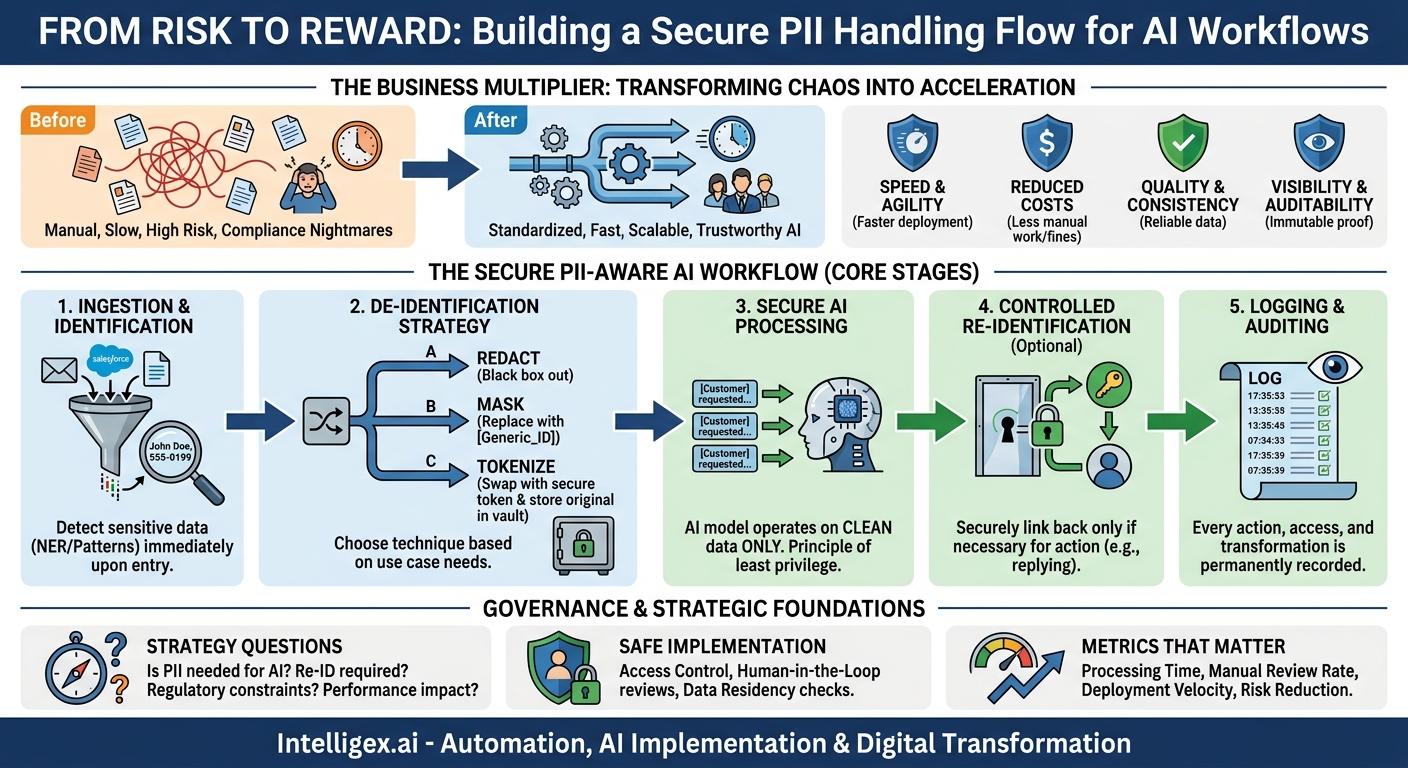
From Risk to Reward: Building a Secure PII Handling Flow for AI Workflows

28 April 2026|AI Strategy & Governance|

Using AI with customer data presents significant PII risks, from data breaches to regulatory fines. This article outlines a structured PII handling flow to mitigate these risks by systematically identifying, de-identifying, and securely processing sensitive information. By implementing this framework, businesses can accelerate AI innovation, reduce operational costs, and build a trustworthy foundation for scalable operations.

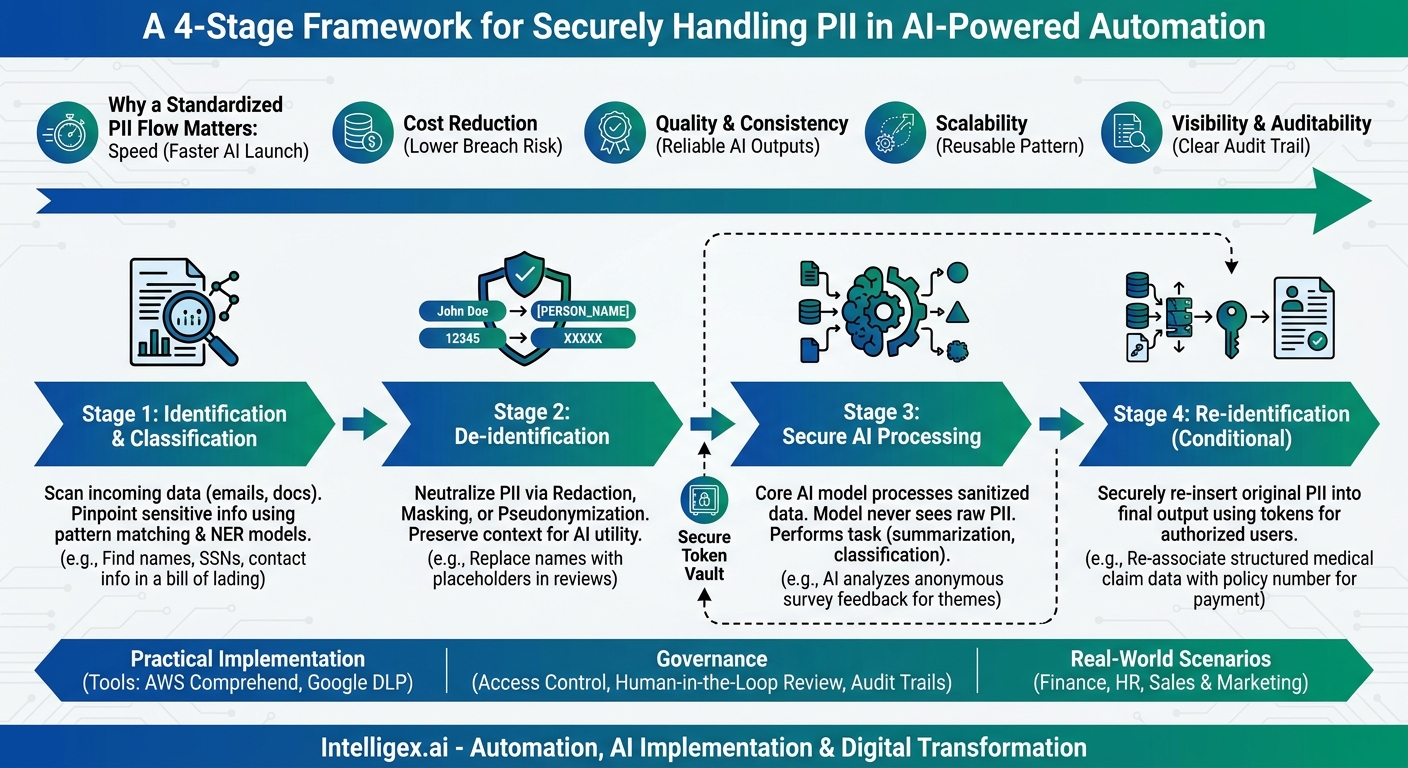
A 4-Stage Framework for Securely Handling PII in AI-Powered Automation

28 April 2026|AI Strategy & Governance|

Integrating AI into workflows with sensitive data introduces major security and compliance risks that can hinder innovation. This article provides a standardized, four-stage framework for handling Personally Identifiable Information (PII) securely within your automated processes. By implementing this repeatable model for de-identification and secure processing, organizations can transform a potential liability into a business accelerator, enabling scalable and compliant AI adoption.

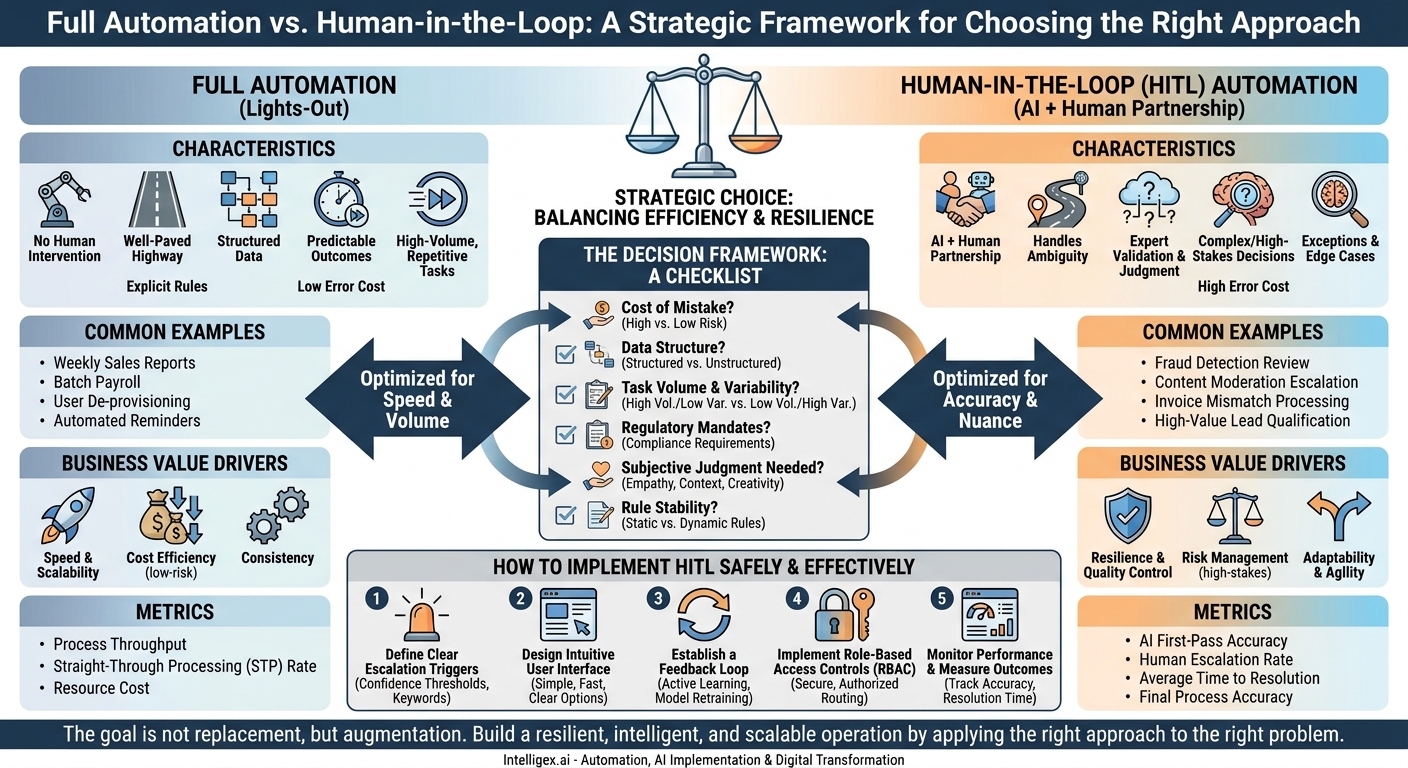
Full Automation vs. Human-in-the-Loop: A Strategic Framework for Choosing the Right Approach

23 April 2026|AI Strategy & Governance|

The push for hyper-efficiency often leads businesses to pursue full 'lights-out' automation, but this isn't always the optimal strategy. A Human-in-the-Loop (HITL) approach, which combines AI's speed with human judgment for key decisions, often creates more resilient and scalable workflows. This article provides a strategic framework to help you decide which model is right for your processes, balancing cost, quality, and risk to build truly intelligent operations.

Go to Top