
Intelligex Logo
Intelligex Logo
Get A Consultation

Guides, Templates & Instructions

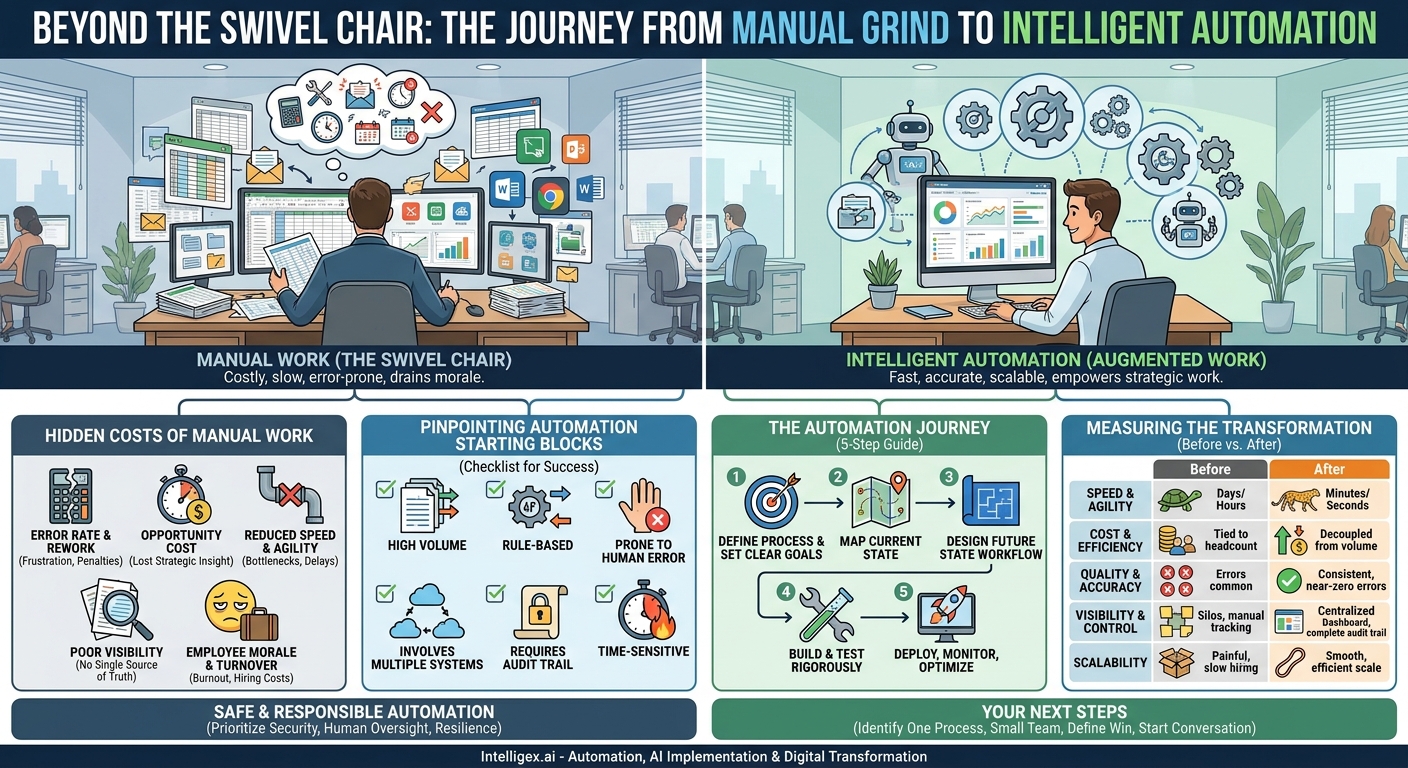
Beyond the Swivel Chair: The True Cost of Manual Work and How to Start Automating

29 April 2026|Guides, Templates & Instructions|

Manual "swivel chair" processes are a significant drain on business resources, introducing hidden costs through errors, opportunity loss, and reduced agility. This article exposes the true cost of doing things by hand and provides a clear framework for identifying high-impact automation opportunities. Learn how to take your first steps, from mapping a process to measuring the transformative impact on speed, quality, and scalability.
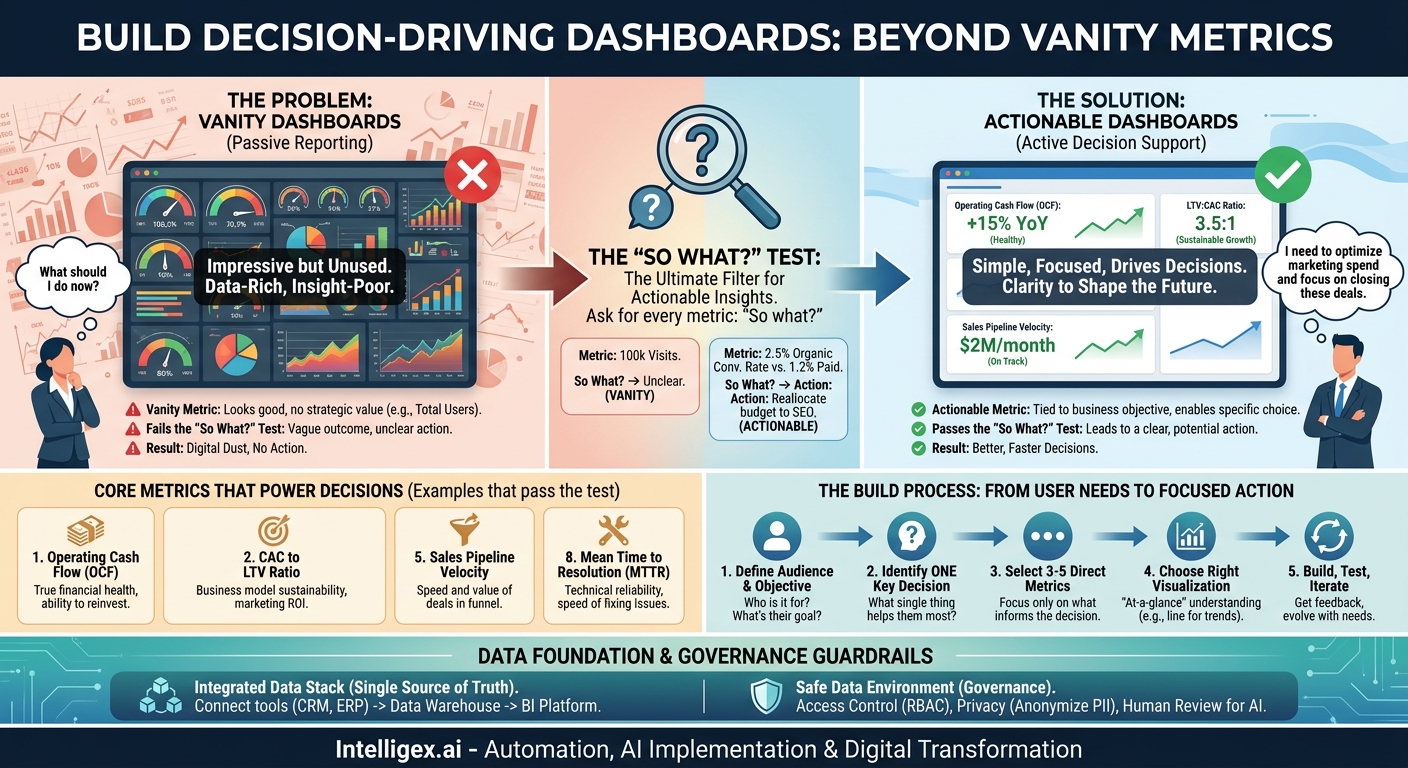
Beyond Vanity Metrics: How to Build Dashboards That Actually Drive Decisions

29 April 2026|Guides, Templates & Instructions|

Too many business dashboards are data-rich but insight-poor, full of vanity metrics that fail to guide action. This article introduces a practical framework for creating effective dashboards by focusing on actionable metrics that pass the "So What?" test. Learn how to identify the right KPIs and build a focused tool that provides clarity and drives better, faster business decisions.

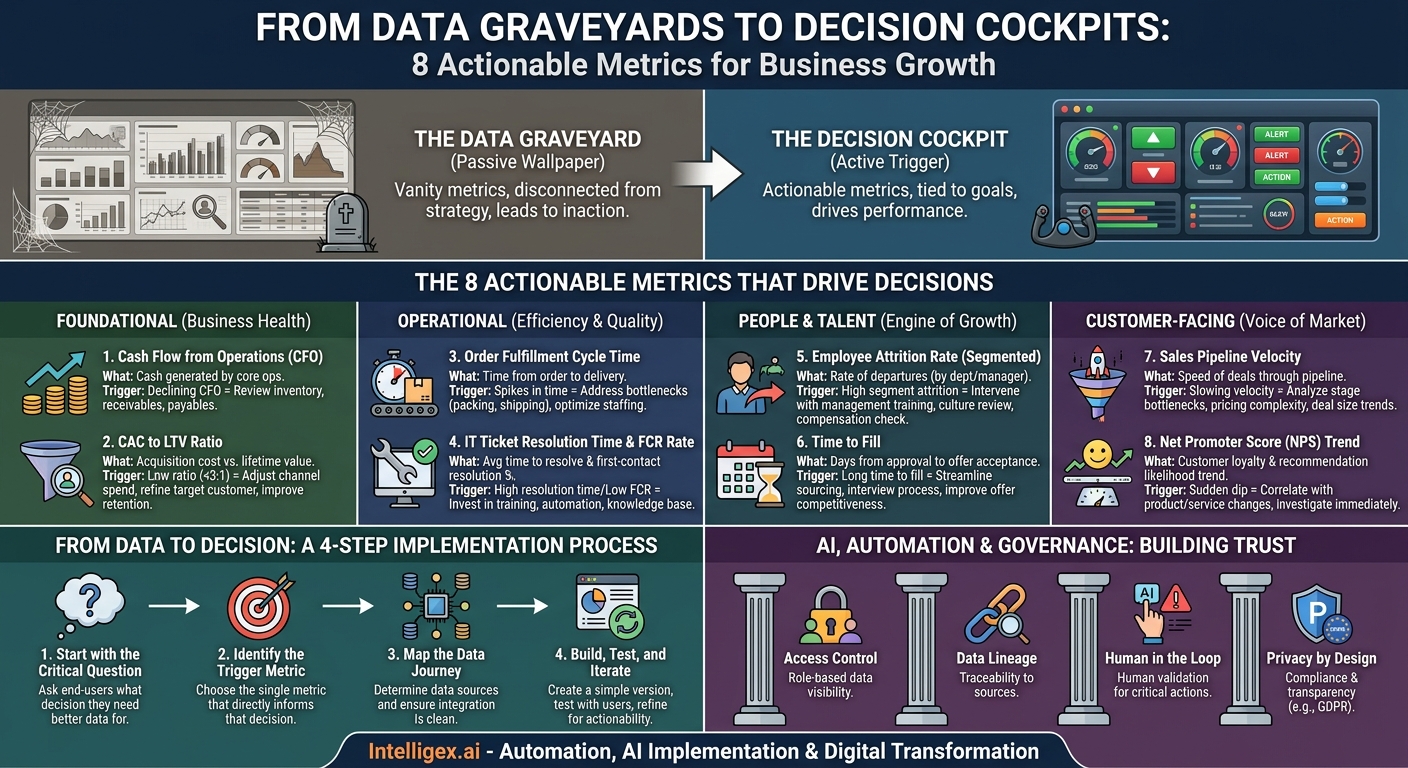
From Data Graveyards to Decision Cockpits: 8 Actionable Metrics for Your Business Dashboard

29 April 2026|Guides, Templates & Instructions|

Many business dashboards are just data graveyards, filled with vanity metrics that fail to drive action. The key to creating a useful tool is to focus on actionable metrics that are directly tied to strategic decisions. This guide cuts through the noise, detailing eight specific metrics used by finance, operations, and sales teams to transform passive reports into active triggers for business improvement.

Beyond the Happy Path: Building Resilient Automation with Exception Queues

29 April 2026|Guides, Templates & Instructions|

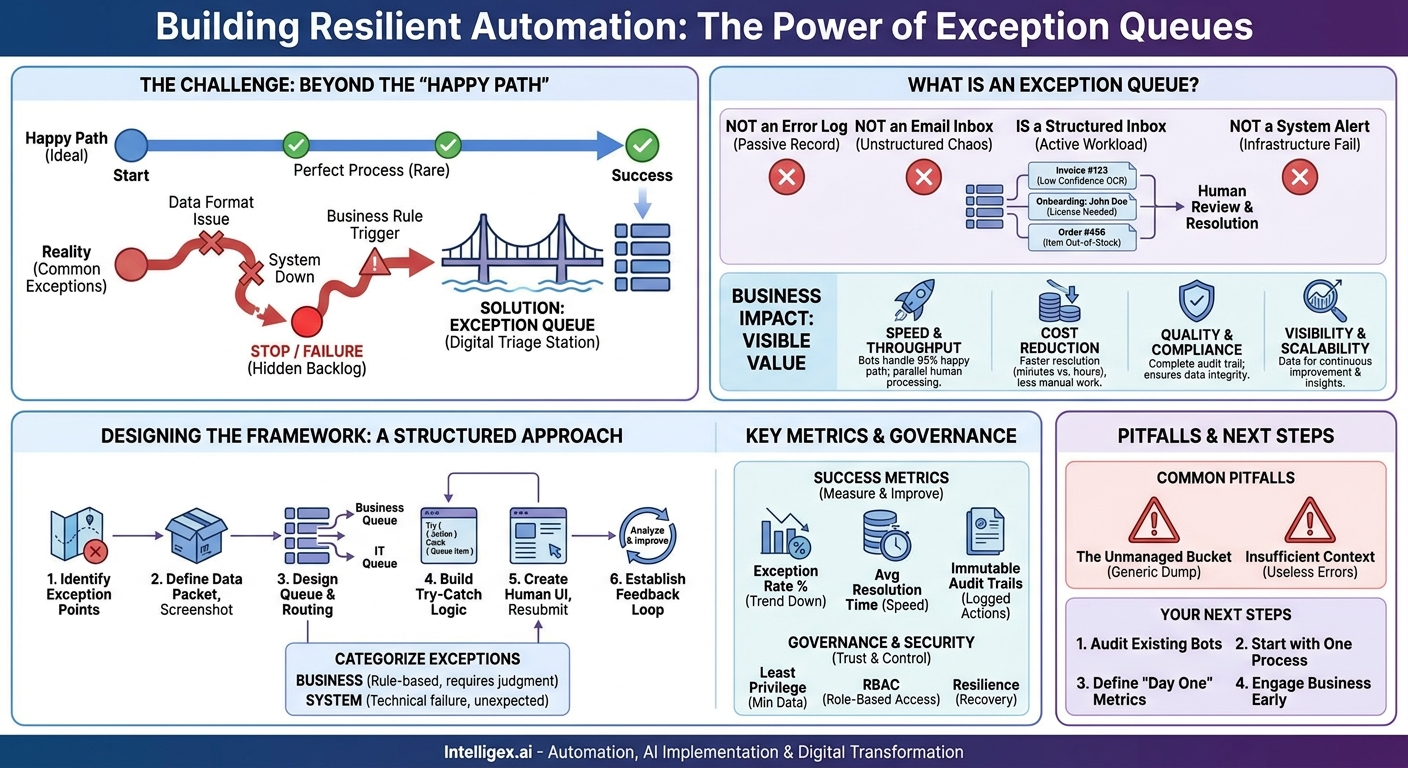
Automation programs often fail when they encounter unexpected variations, creating costly backlogs and eroding value. Instead of treating these as failures, a resilient approach uses exception queues to manage them systematically. This framework turns disruptive problems into manageable business tasks by routing failed transactions to the right human expert with all the necessary context, improving throughput, quality, and process visibility.

From Silent Failures to Resilient Processes: Implementing an Automation Exception Queue

29 April 2026|Guides, Templates & Instructions|

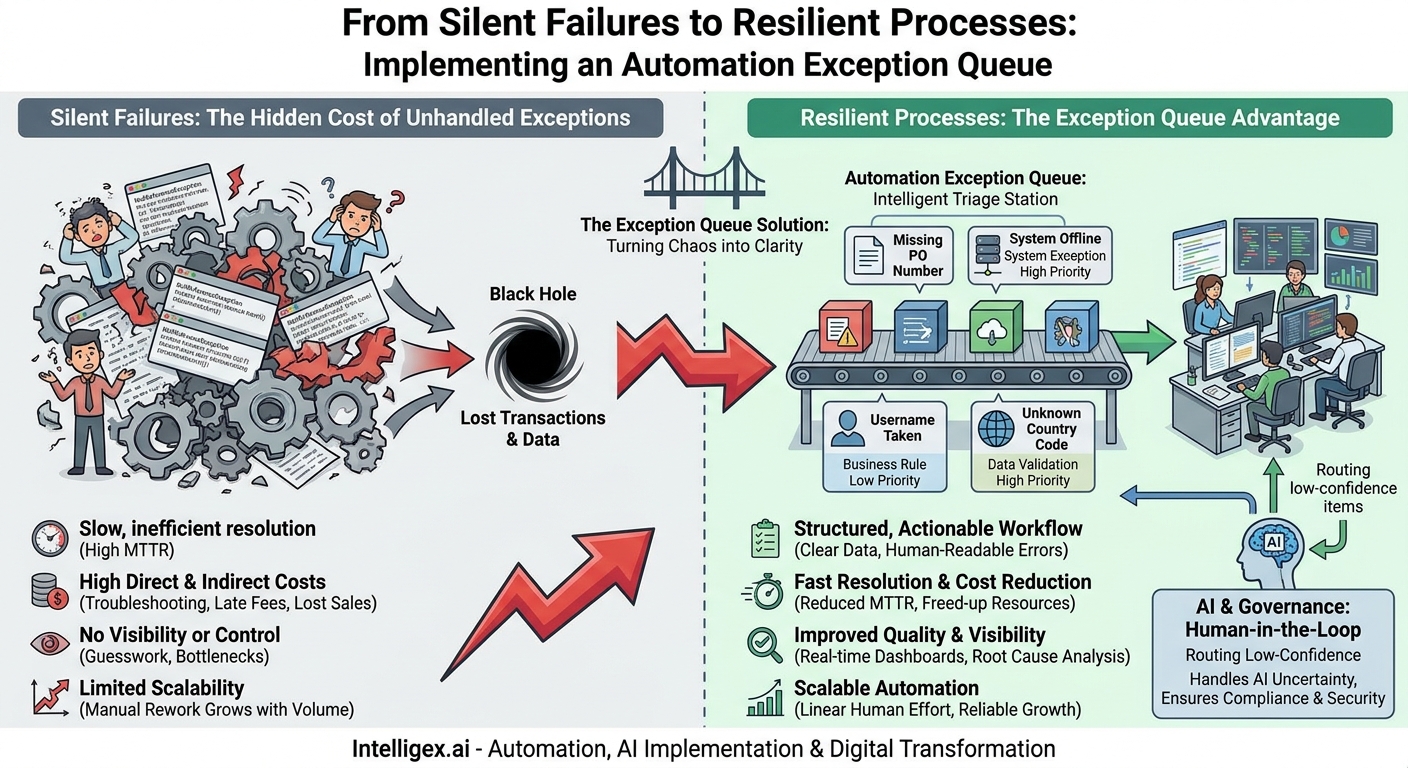
Automated processes inevitably encounter exceptions, like data errors or system timeouts, which can cause silent failures and costly rework. This article explains how to implement a structured exception queue, a system for capturing, triaging, and resolving these issues efficiently. By turning failures into a managed workflow, you can reduce resolution time, improve process quality, and ensure your automation program can scale reliably.

10 common workflows that are holding back your growth (and how to fix them)

29 April 2026|Guides, Templates & Instructions|

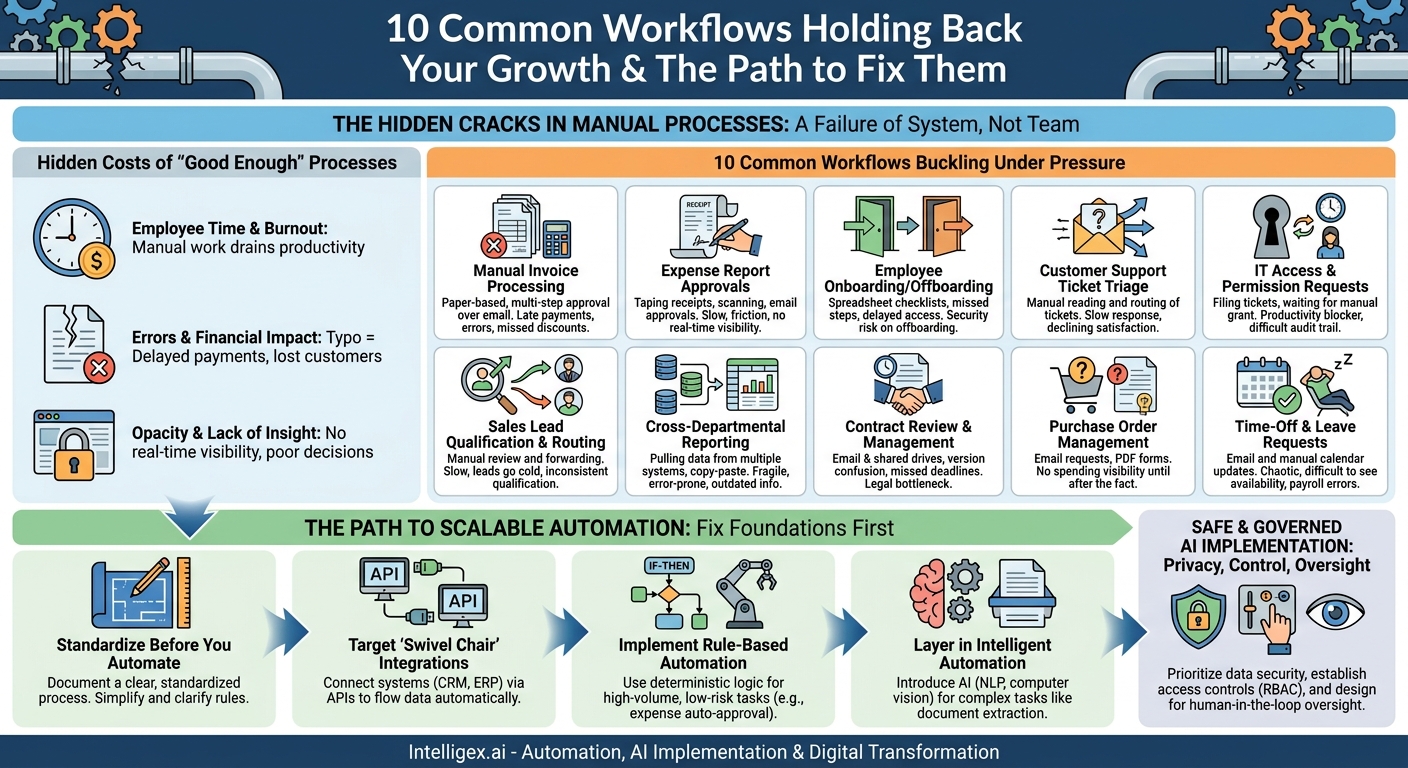
Manual processes that serve small teams often become major bottlenecks during periods of growth, creating errors, operational drag, and a lack of visibility. This article identifies 10 common workflows that break under pressure and provides a practical framework for diagnosing and redesigning them. By moving from manual effort to automated systems, you can build a resilient operational foundation that supports scale instead of resisting it.

How to identify and fix the 10 most common workflows that break at scale

29 April 2026|Guides, Templates & Instructions|

As businesses grow, manual processes and spreadsheet-driven workflows often become critical bottlenecks, leading to inefficiency, errors, and frustrated teams. This article breaks down the 10 most common workflows that fail to scale across finance, HR, and operations. Learn a practical framework to identify these friction points and redesign them to build an operating model that accelerates growth instead of hindering it.

From Chaos to Control: A Guide to Building Your AP Approval Matrix

22 April 2026|Guides, Templates & Instructions|

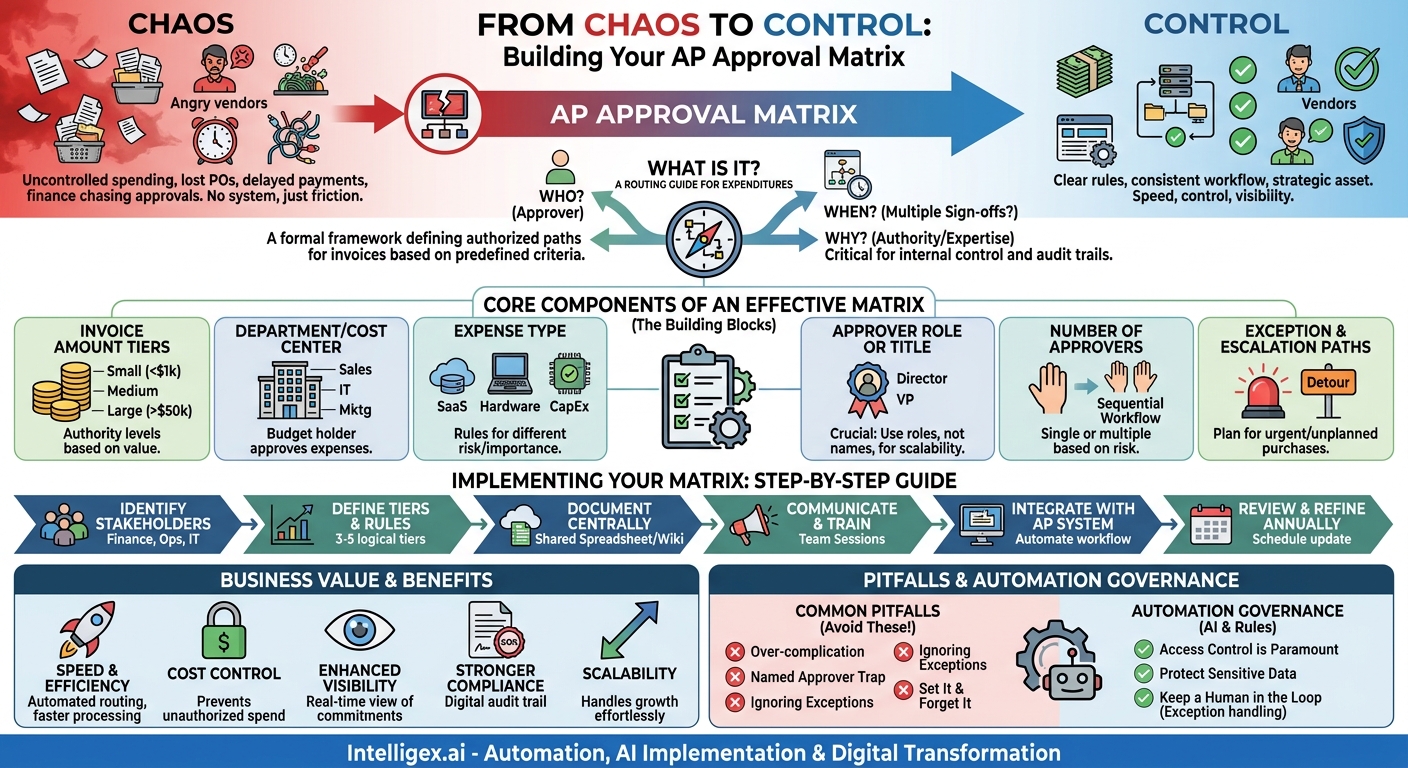
Uncontrolled spending and payment delays are symptoms of a broken accounts payable process. An AP approval matrix solves this by establishing a formal framework that dictates who can approve specific invoices based on clear criteria like amount or department. Implementing this system transforms your AP process from a source of friction into a strategic asset, providing enhanced speed, control, and financial visibility.

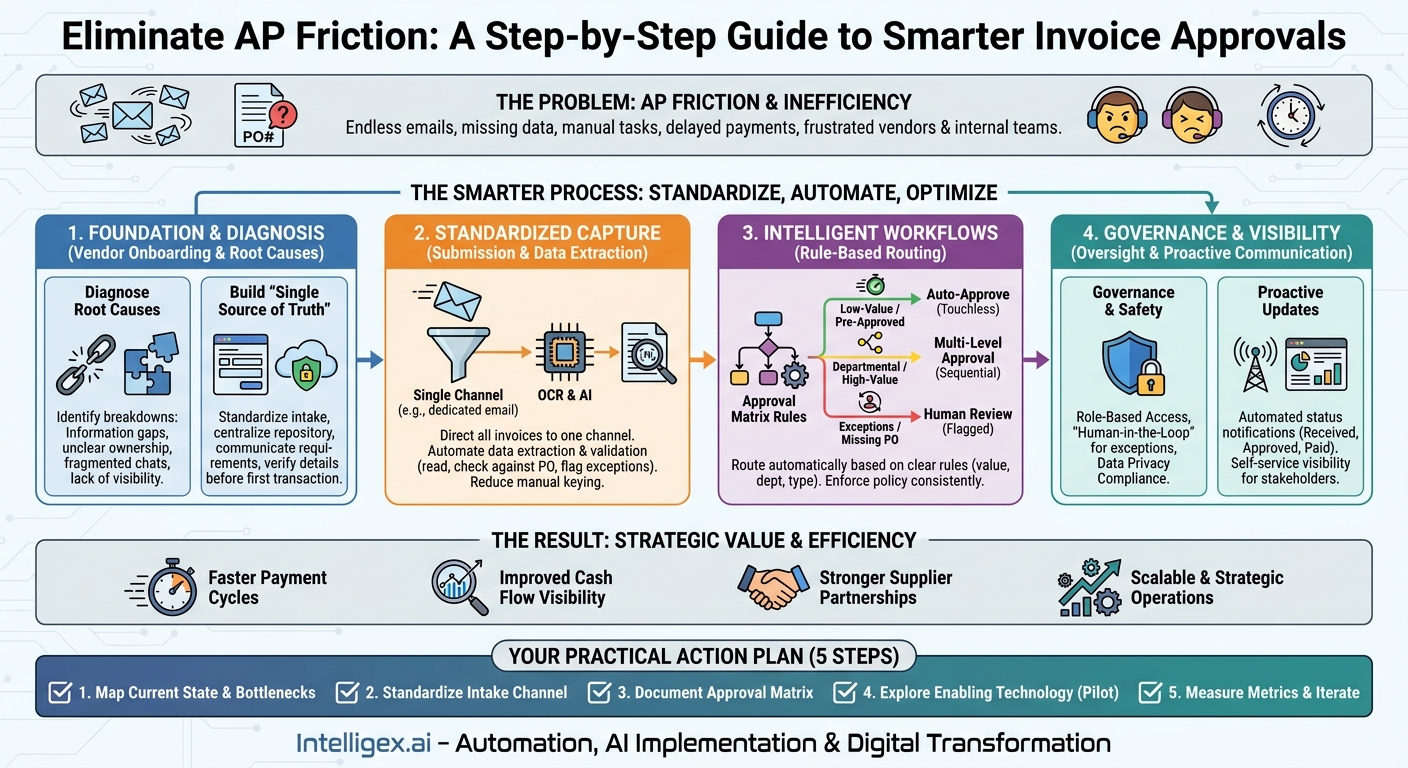
Eliminate AP Friction: A Step-by-Step Guide to Smarter Invoice Approvals

22 April 2026|Guides, Templates & Instructions|

Inefficient AP approval processes create costly delays and strain vendor relationships, acting as a hidden tax on your organization. This article provides a step-by-step guide to diagnosing the root causes of this friction, from standardizing vendor onboarding to implementing intelligent, rule-based workflows. By following these steps, you can transform AP from a reactive cost center into a streamlined, strategic function that improves efficiency and operational agility.

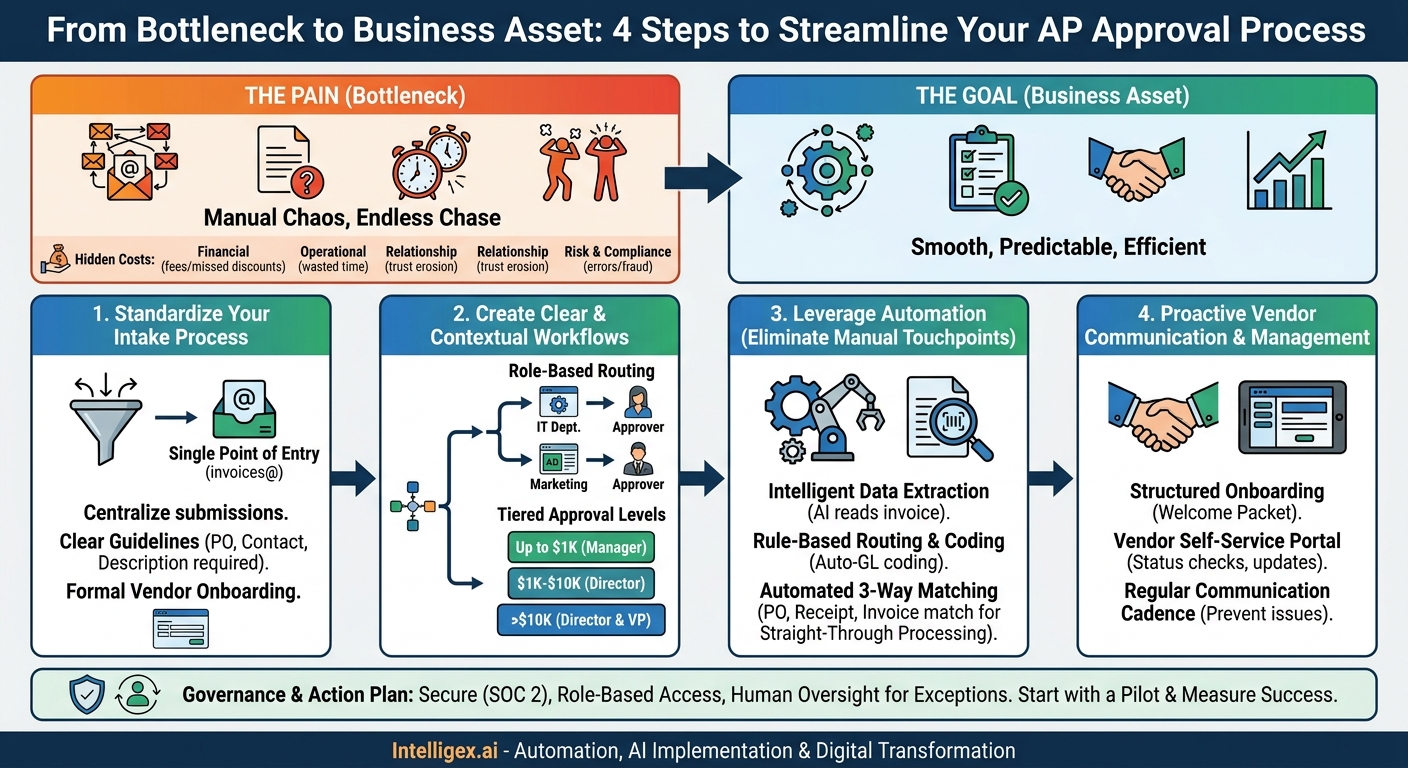
From Bottleneck to Business Asset: A 4-Step Guide to Streamlining Your AP Approval Process

22 April 2026|Guides, Templates & Instructions|

Inefficient Accounts Payable approval processes create financial costs, operational delays, and damage vendor relationships. This guide outlines a structured, four-step approach to transform your AP workflow from a bottleneck into a strategic asset. By standardizing intake, creating contextual workflows, and leveraging automation, you can build a faster, cheaper, and more secure payment system.

Go to Top